Mason Bees: Meet Your Pollinators
Two Bees. Two Seasons. More Pollination.
Meet the gentle solitary bees that can transform your garden. Mason bees get to work in spring, pollinating fruit trees, berries and early blooms. Leafcutter bees take over in summer, pollinating vegetable gardens, flowers and other summer blooms. Together, they provide powerful pollination throughout the growing season.
What Are Mason Bees?
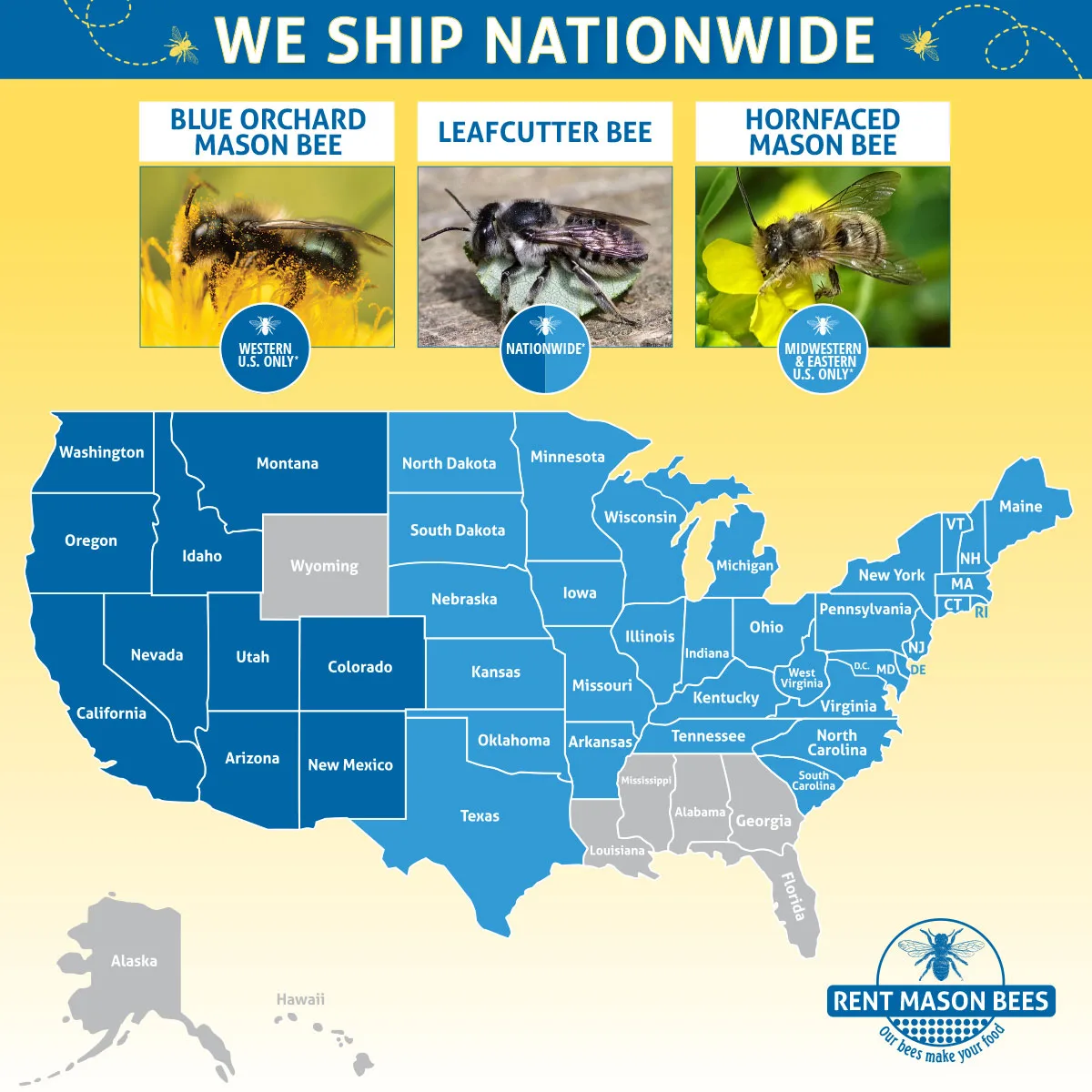
Mason bees are gentle, solitary spring bees. Each female nests on her own. There's no hive, no queen and no honey. She builds mud walls in her nest to protect her young, which is where the mason name comes from. In the western U.S. we ship the blue orchard mason bee (Osmia lignaria). In the Midwest and East, it's the hornfaced bee (Osmia cornifrons).
What Are Solitary Bees?
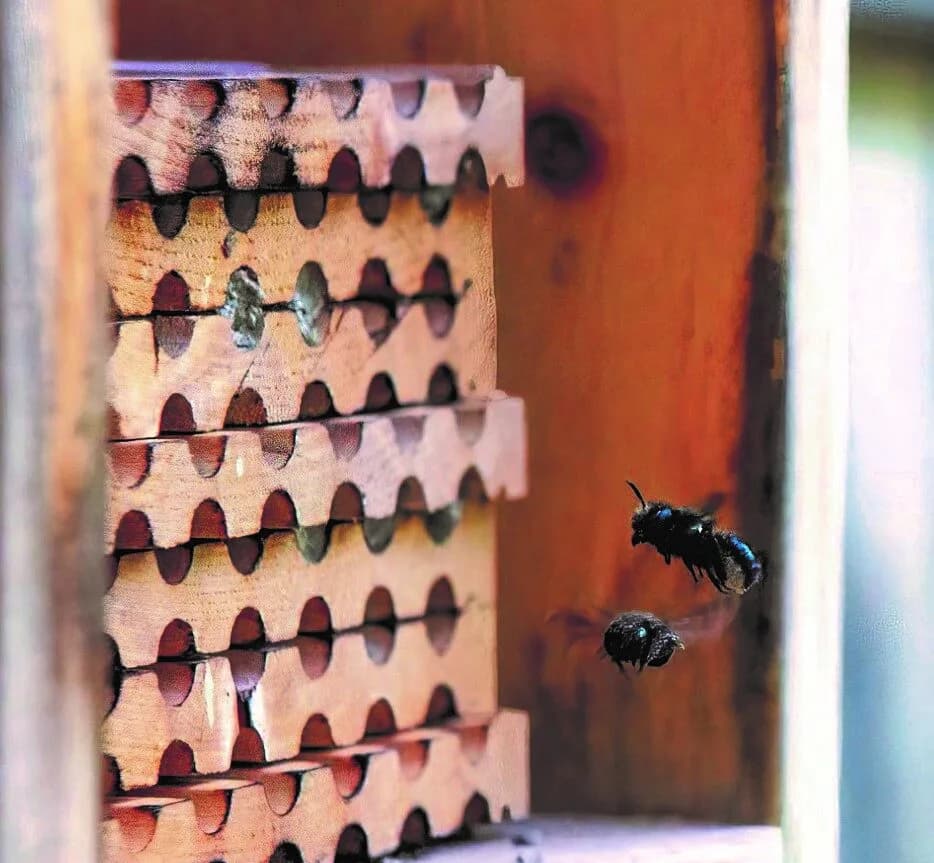
Solitary bees live and work alone. Each female lays her own eggs, gathers food, and nests without a hive, queen, or honey production. Their independent lifestyle makes them gentle, non-aggressive, and safe around children and pets.
Why Are They Better Pollinators?
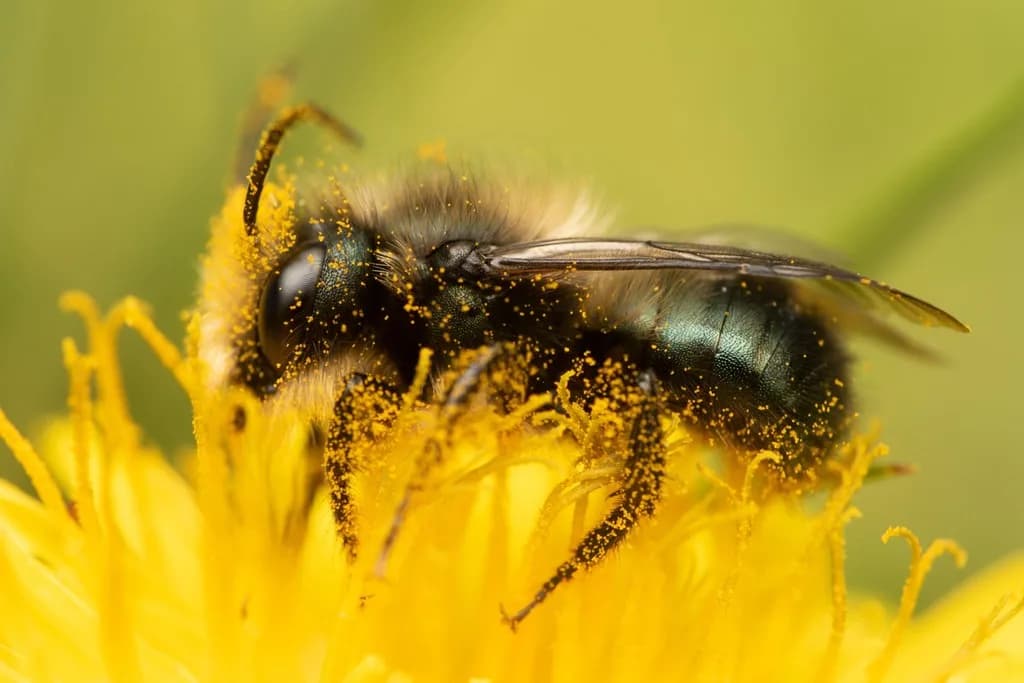
Solitary bees pollinate differently than honeybees. Instead of packing pollen on their legs, they “belly-flop” onto blooms, collecting loose pollen across their bodies. This makes them incredibly efficient — visiting up to 2,000 flowers a day and pollinating about 95% of the blooms they touch.
OBA Certified
We follow strict guidelines, maintain regional segregation, and ship only dormant cocoons with cooling packs for safe delivery.

Spring Mason Bees
They Pollinate: Fruit trees • Berries • Early-blooming flowers • Herbs • Native plants. Especially great for apples, pears, cherries and plums.
They Emerge: Mason bees emerge in early spring around 55°F, just as many fruit trees and early flowers begin blooming.
Their Life-Cycle: These gentle pollinators are active for about 6–8 weeks, making the most of the spring blooms.
Blue Orchard Bee, Osmia lignaria (Western U.S. Only*)
The blue orchard bee is a docile bee native to North America. Adult bees emerge from their cocoons in the spring when fruit trees and many of our native shrubs and herbs are in bloom. These highly efficient pollinators increase fruit production as well as improve the overall health of their ecosystems. This mason bee uses mud to build nest partitions and protect their young from invading pests. They are fun to watch throughout the spring and are an important member of western ecosystems.
(*This bee species is available in the following states: Alaska, Arizona, California, Colorado, Idaho, Montana, Nevada, New Mexico, Oregon, Utah and Washington.)
Horn-Faced Bee, Osmia cornifrons (Midwestern and Eastern U.S. Only*)
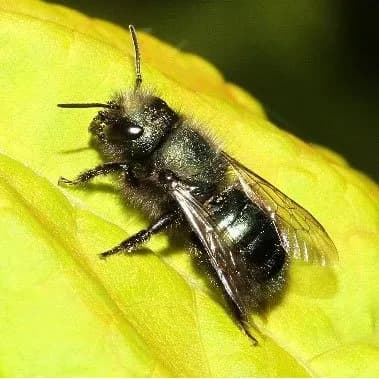
Horn-faced bees were introduced to the United States by the USDA decades ago and are now well established across the Midwest and Eastern regions, where they are actively used for pollination. They are a recognized, non-invasive species and do not harm other bees. Like blue orchard bees, horn-faced bees are active in early spring, emerging when fruit trees, shrubs, and early-season blooms need pollination most. While they use mud to build their nesting chambers, they also incorporate leaf pulp making them slightly more adaptable in certain environments. Horn-faced bees are particularly well suited to humid conditions and can tolerate colder climates better than blue orchard bees, making them an excellent choice for a wider range of regions. We are certified by the Orchard Bee Association (OBA) and follow all guidelines for the responsible management and shipment of solitary bees.
(*This bee species is available in all U.S. states EXCEPT: Alaska, Alabama, Arizona, California, Colorado, Florida, Georgia, Hawaii, Idaho, Louisiana, Mississippi, Montana, Nevada, New Mexico, Oregon, Utah, Washington, and Wyoming.)
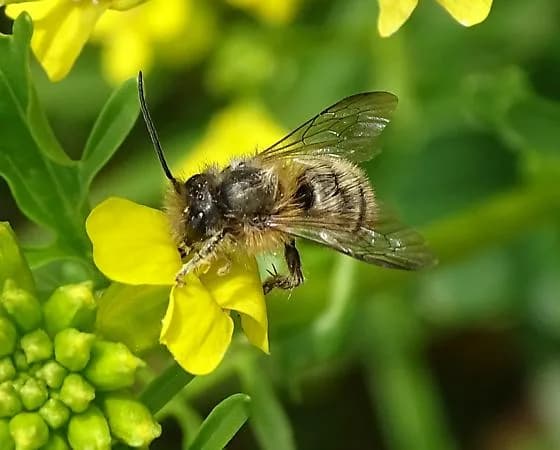
Meet the Summer Leafcutter Bee
They Pollinate: Vegetable gardens • Summer flowers • Herbs • Summer-blooming plants • Greenhouses.
They Emerge: When summer temperatures are consistently 75°F+, leafcutter bees get to work.
How They Nest: Female leafcutter bees cut small pieces from leaves and petals to build protective little sleeping bags for their developing young.
Leafcutter Bee, Megachile rotundata (Nationwide*)
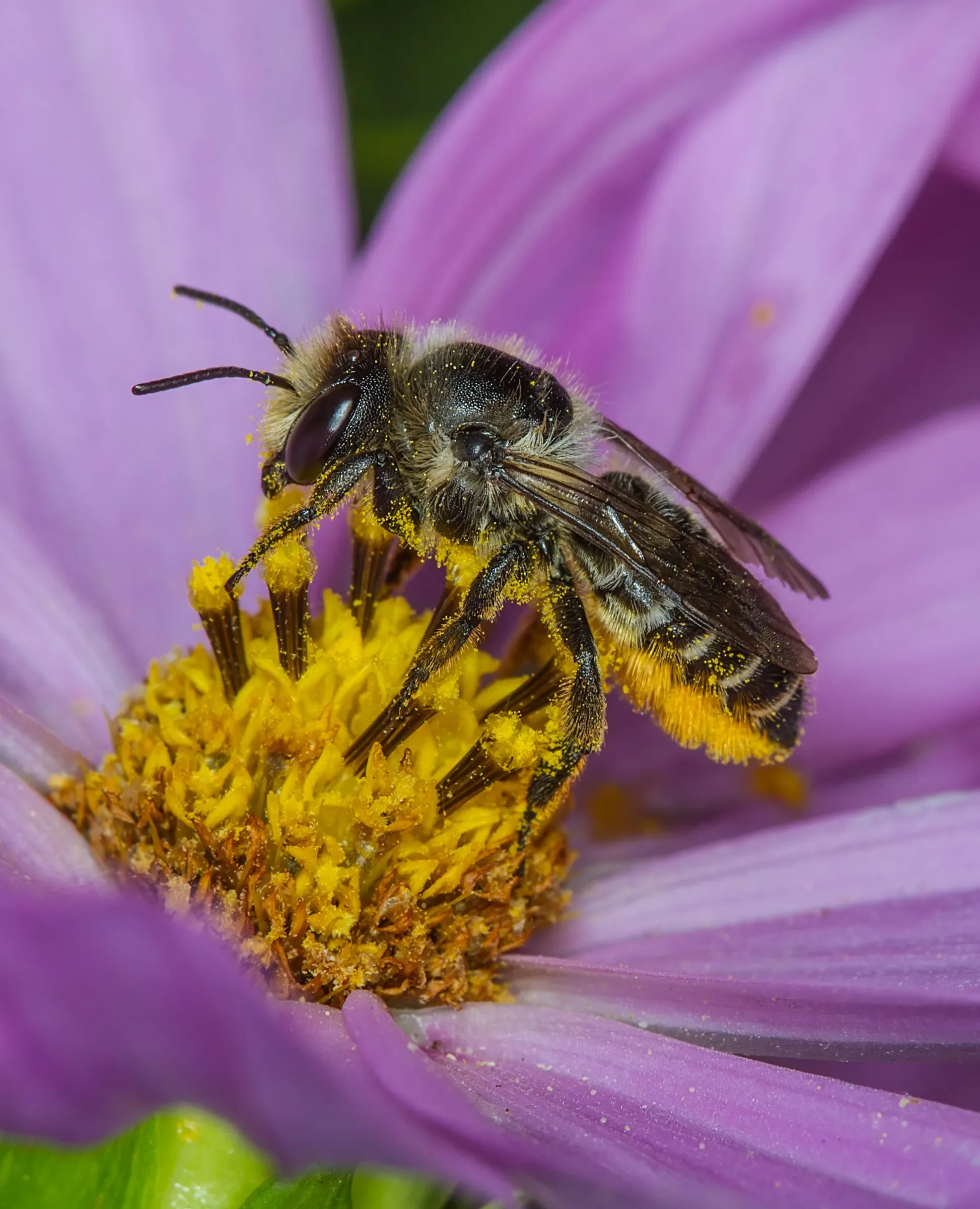
Leafcutter bees are found across North America and are used around the world for alfalfa pollination. Honey bees do not efficiently pollinate alfalfa due to a spring-loaded pistil mechanism in the alfalfa flower, which they avoid. The small leafcutter bee effectively pollinates by “tripping” the pistil, and is responsible for creating the majority of feed for pigs and dairy cows. They are an equally gentle generalist bee that will visit a majority of types of flowers in your backyard during their flying months of July and August, including your flowering vegetable garden. As their name suggests, leafcutter bees use leaf pieces, which they cut using their mouth-parts, to construct their nests.
(*This bee species is available in all U.S. states EXCEPT: Hawaii and Wyoming.)
We Ship Nationwide