Blog · Mason Bees · Newsletter · Bee Care ·
Complete Guide to Hosting Mason Bees!

Whether you release bees and rent our nesting blocks or you’re raising and cleaning your own bees, this guide will teach you what to expect and get you ready for mason bee season!
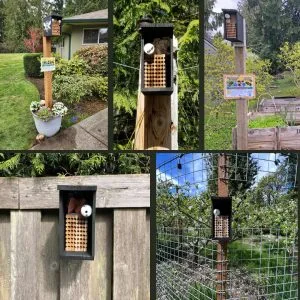 WHERE TO HANG: MORNING SUN THROUGH AFTERNOON SUN
Mason bees are early spring pollinators, so overnight temps may get cold. As long as those daytime temps reach 50+ degrees, they’ll be fine. The house is painted black to attract the morning sun. Hang your house on a flat surface (not a tree) about 5-6 feet off the ground, where morning sun will warm them up and keep them warm throughout the afternoon.
Watch How to Hang on a Wall or Make a Free-Standing Base.
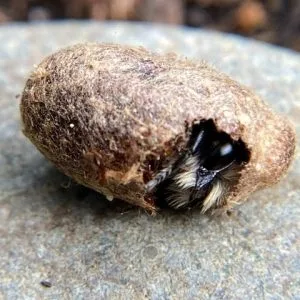 WHEN WILL YOUR MASON BEES EMERGE? LISTEN FOR THE CRACKLE!
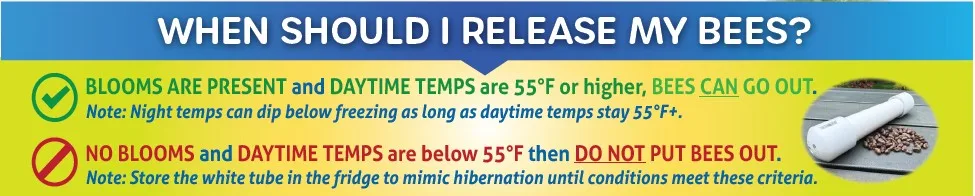
Everyone’s yard is a little different so bee activity levels can vary. Mason bees will start to emerge when temperatures reach 55+ degrees. Male mason bees are the first bees to hatch. Then, the females will emerge 1-2 weeks later. Listen carefully, you may hear the sound of crackling (like rice crispies… that is the sound of mason bees chewing out of their cocoons). Watch this video and TURN VOLUME UP to hear what it sounds like.
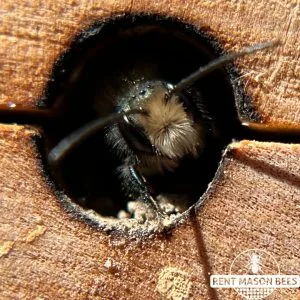 Male Mason Bees
The male mason bees have a small white tuft of hair on their head and are smaller than the females. They will forage around to find nectar to eat until the females have hatched. As the males patiently wait for the females to emerge, you may see them flying back into the white PVC tube. “Come on girls… wake up.”
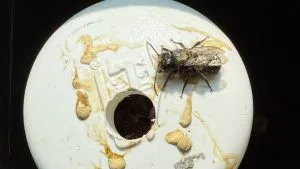 What Are Those Brown Markings on the Outside of the Tube?
Those brown markings on the outside of the tube and house are scent marks made from the males when they emerge. That is how they know where to come back to find the females. It is important that you do not wipe off the markings as it will confuse the bees.
 Where Did the Females Go?
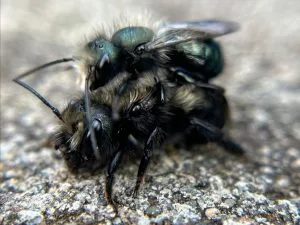
Once the females emerge, they will go in search of the males to get fertilized. Once the females are fertilized they will start looking for nesting sites. In search for the males they may find some great nooks and crannies in your yard or they may come back to your nesting block.
Male and female bees mate and then the males’ life cycle will be over. The females will fly for the rest of the spring season, pollinating your backyard while completing their egg laying process.
 What Do My Mason Bees Look Like?
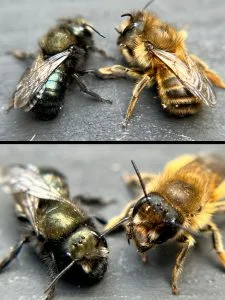
Depending on where you live will determine what type of bee you will receive. If you live in the Western U.S., you will receive the Blue Orchard Mason Bee. This bee resembles a house fly and some kids love to call them mermaid bees because of their greenish-blue iridescent sheen.
If you live in the Mid-Western and Eastern States, you will receive the Horn-Faced Bee. They are fuzzy and have yellow and brown stripes.
 WHEN WILL YOUR LEAFCUTTER BEES EMERGE?
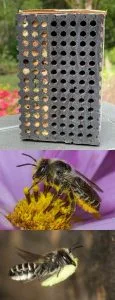
If you received the pollinator package, your mason bees will go out first and at the end of spring you will swap blocks and insert your leafcutter bees. Some of our warm states have already received their leafcutter bees. Leafcutter bees emerge when temperatures reach 75+ degrees. If you’re NOT in a warm state, please store your bees in a cool garage or shed until the end of spring (They Do Not Go in the Fridge)
One of the big differences between mason and leafcutter bees is their life cycle. When you rent leafcutter bees from us, we send you a leafcutter nesting block with 3 rows of the block full of leafcutter bees snug in their leaf sleeping bags for safe and easy transport. When we send you your bees, leafcutters arrive in their larvae state, whereas, mason bees are fully grown in their cocoons.
Since your leafcutters arrive in their larvae state, they need 75+ degree weather for 2-3 weeks to finish developing into an adult bee. This usually occurs towards the middle or end of July or if you’re in our warmer states this will occur sooner.
Keep an eye open for little bees flying around with tiny pieces of leaves and marvel at their hard work and mastery of making their nests and see your VEGGIE GARDEN THRIVE!!
SPRING IS ALSO THE TIME BIRDS AND PAPER WASPS BUILD THEIR NESTS. MAKE SURE YOU WATCH THE FOLLOWING VIDEOS TO LEARN HOW TO PREVENT THIS FROM HAPPENING
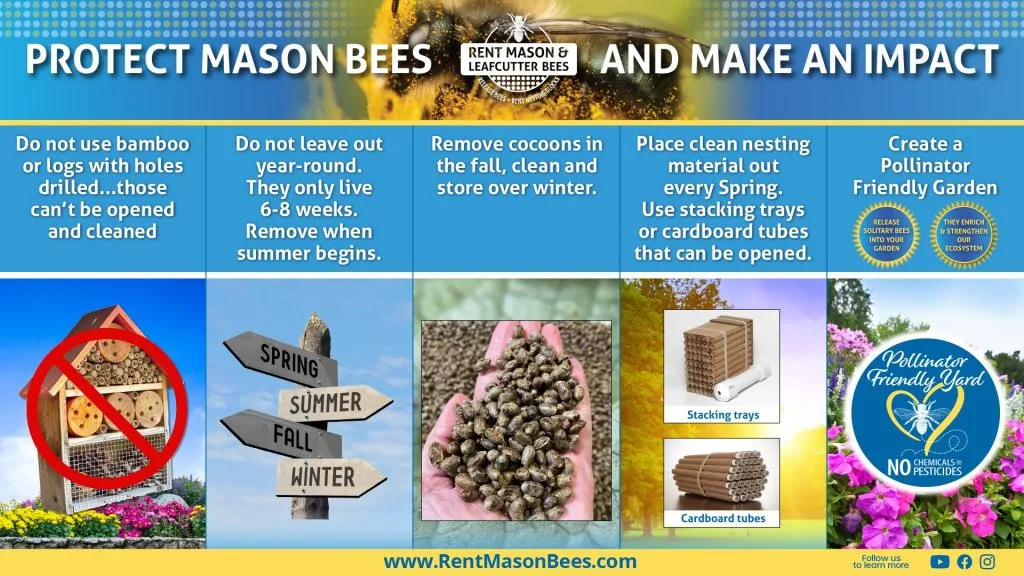
If You Are Raising Your Own Bees This Spring, Please Remember to Do the Following:
- Place New Nesting Material Out Every Spring
- Do Not Use Bamboo or Logs with Holes Drilled
- They Do Not Stay Out All Year Long Remove Nesting Material End of Spring
- Clean in the Fall