

Learn What Houdini Flies Look Like in Mason Bee Nest

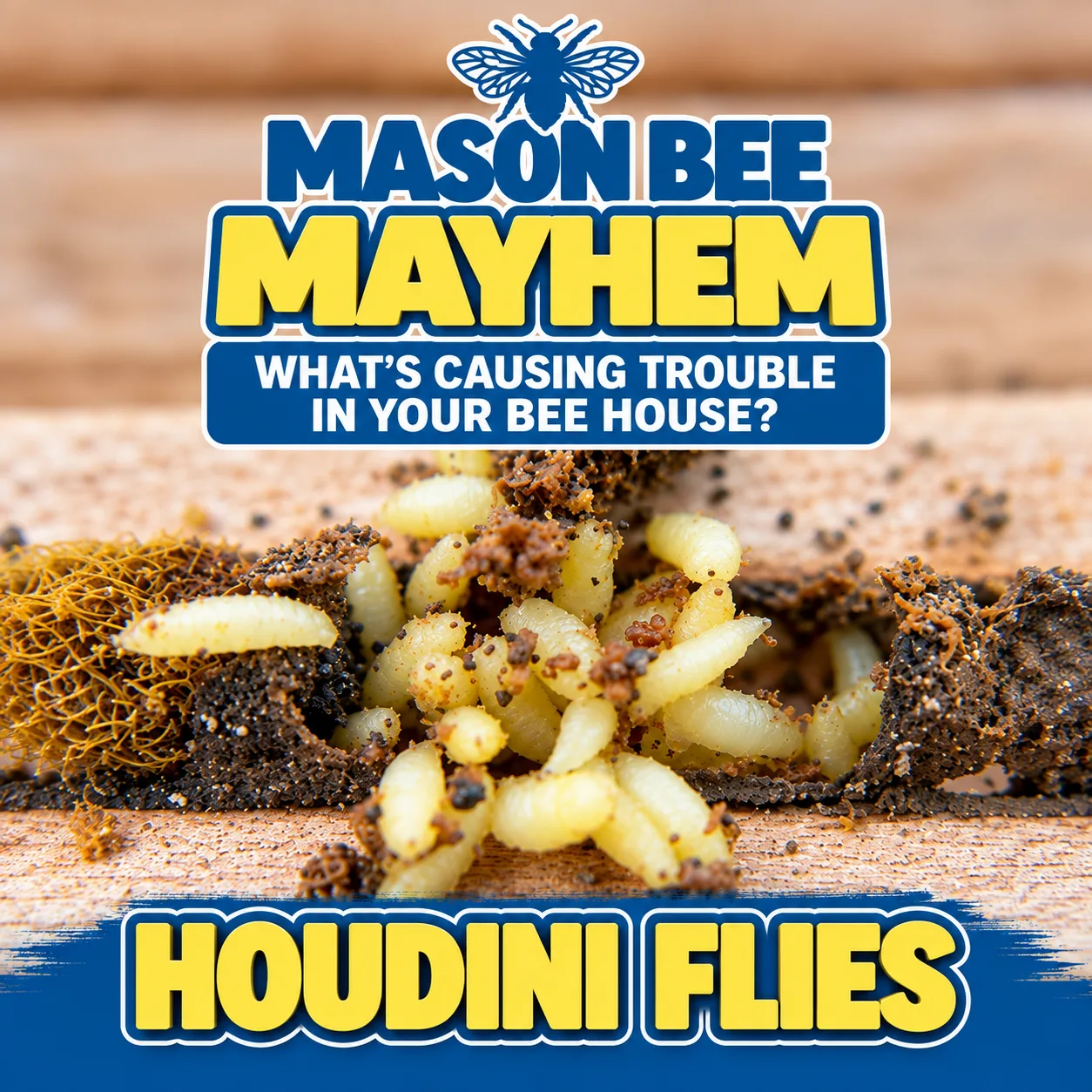
Houdini flies are an invasive predator of mason bees, and you may never know they are there just by looking at the outside of your bee house. Their larvae develop inside mason bee nesting cavities, where they consume the pollen provisions intended for developing mason bees. From the outside, a mason bee house may look perfectly healthy. But once nesting materials are opened during fall maintenance, you will discover pests and parasites hiding inside.
In this video, we’re taking you inside a mason bee nest for an up-close look at Houdini fly larvae so you can learn what they look like, recognize the signs they leave behind, and understand why proper fall harvesting and cleaning are so important.
What Are Houdini Flies?
The Houdini fly (Cacoxenus indagator) is a small invasive fly that targets mason bee nests.
Female Houdini flies enter mason bee nesting cavities and lay their eggs near the pollen and nectar provisions that mother mason bees have carefully collected for their offspring. When the fly eggs hatch, Houdini fly larvae consume the food intended for the developing mason bee, killing the developing mason bee.
If the infested nesting material isn’t opened and properly managed, Houdini flies can remain hidden inside and emerge the following spring alongside your mason bees. The numbers can multiply quickly. A female Houdini fly can up to 300 hundred eggs, while a female mason bee produces about 15 in her lifetime. That means an unmanaged infestation can produce many more Houdini flies ready to target mason bee nests the following season.
This is why identifying and removing Houdini flies during fall harvest is so important. What starts as a few hidden larvae inside a nesting block can become a much bigger problem for future generations of mason bees.
What Do Houdini Fly Larvae Look Like?
When you open a nesting chamber affected by Houdini flies, one of the first things you may notice is curly, brown frass. Frass is the waste left behind by the Houdini fly larvae, and it can be an important clue that something is hiding inside the nest.
Look beneath the frass and you may find the Houdini fly larvae themselves: small, yellowish, worm-like maggots living inside the nesting chamber and feeding on the pollen provisions intended for the mason bee.
The tricky part is that all of this is happening behind the mud walls of the nest. From the outside, everything can look perfectly normal. You can watch mason bees flying in and out of your bee house all spring and have no idea that Houdini fly larvae are developing inside.
That’s why fall harvesting and knowing what to look for are so important. Opening and inspecting appropriate nesting materials gives you the opportunity to find and remove Houdini flies before they emerge and continue their life cycle the following spring.
Why Are Houdini Flies a Concern?
Houdini flies can spread from one mason bee nest to another. If infested nesting materials are left unmanaged, adult flies will emerge in Spring with the mason bees and continue the cycle.
This is particularly important because Houdini flies are invasive. Learning to identify and remove them from nesting materials can help reduce their opportunity to reproduce and spread.
If you discover Houdini fly larvae during harvest, don’t ignore them. Properly managing affected nesting material is an important part of protecting the mason bees you’re hosting.
Why Fall Mason Bee Maintenance Matters
Putting up a mason bee house is only the beginning.
Once your mason bees finish nesting for the season, there’s still important work happening inside those nesting chambers. Proper fall harvesting allows you to open appropriate nesting materials, inspect the cocoons, identify unwanted pests and parasites, remove compromised material, clean reusable nesting equipment, and prepare healthy mason bee cocoons for winter.
Without opening the nesting materials, you may never know Houdini flies were there.
See Houdini Fly Larvae Inside a Mason Bee Nest
At Rent Mason Bees, we open, harvest and clean millions of mason bee nesting cavities and cocoons each year, giving us an incredible opportunity to see what is actually happening inside mason bee nests.
We encounter pests, parasites and diseases that can be almost impossible to detect from the outside.
Our Mason Bee Mayhem video series takes you inside real nesting chambers to show you what these problems actually look like, including pollen mites, chalkbrood and Houdini flies.
The goal is simple: learn what to look for, know what doesn’t belong, and understand why caring for your nesting materials matters.
Learn How to Harvest & Clean Your Mason Bees
Want to care for your own mason bees? Our step-by-step video walks you through harvesting your nesting materials and cleaning your mason bee cocoons:
See How We Clean 3 Million Mason Bee Cocoons
Come behind the scenes during our fall harvest and see what it takes to open nesting blocks, inspect nests and clean millions of mason bee cocoons:
Learn More About Mason Bee Predators, Pests & Parasites
If you host mason bees, don’t just put up a bee house and forget about it. Fall care matters.
Learning what’s happening inside your nesting materials is an important part of properly caring for mason bees and helping give the next generation a healthy start.
Visit our Predator Page to Learn More – Predators of Mason Bees – Protect from Pollen Mites, Houdini Flies & Wasps | Rent Mason Bees
Healthy bees start with healthy nesting materials.



