

Learn What Chalkbrood Looks Like in Mason Bee Nest

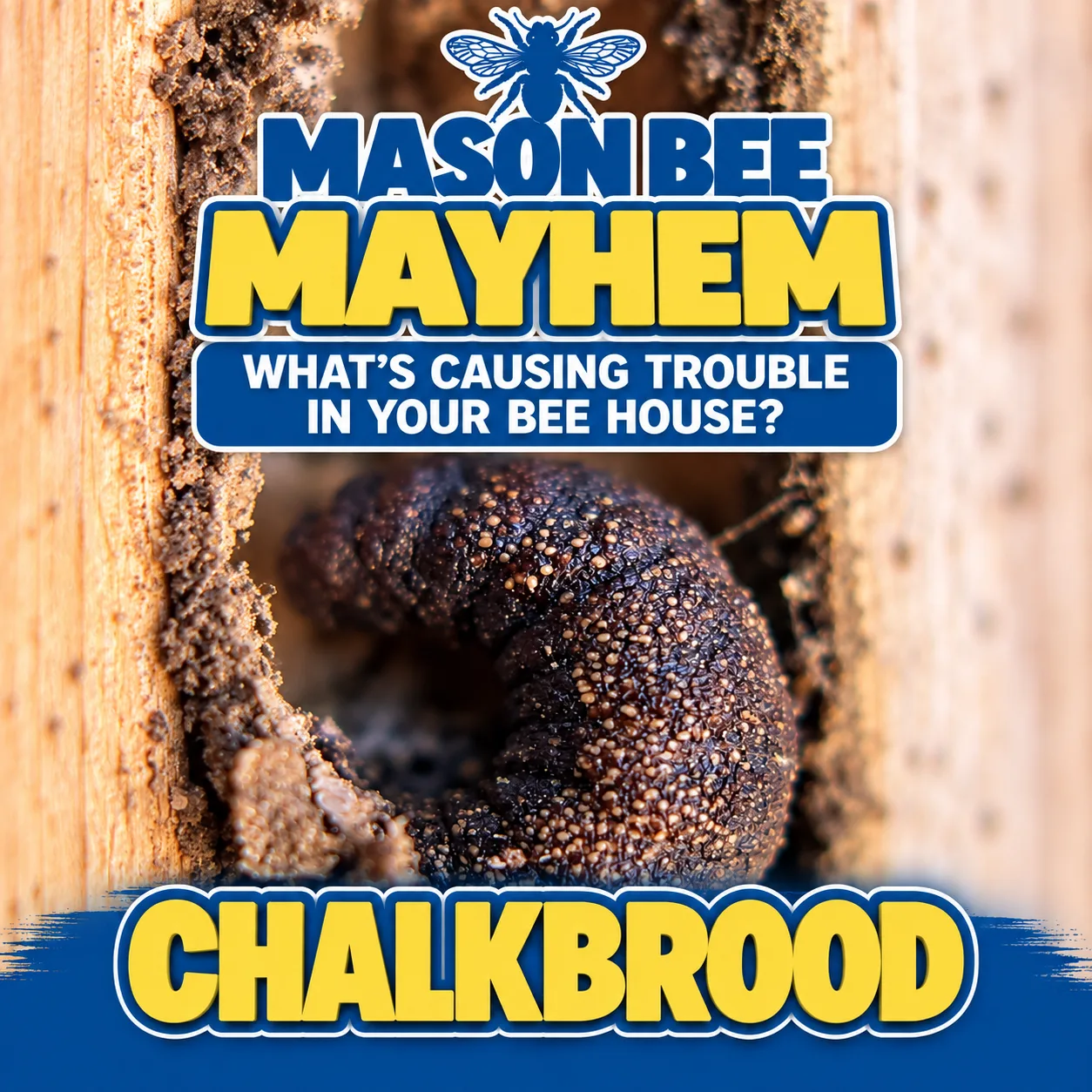
Chalkbrood is a fungal disease that will kill developing mason bee larvae, and its spores can remain in contaminated nesting materials, putting future generations of bees at risk. From the outside, a mason bee house may look perfectly healthy. But when nesting materials are opened during fall maintenance, we can sometimes find pests, parasites and disease hiding inside. In this video, we’re taking you inside a mason bee nest for an up-close look at chalkbrood so you can learn how to recognize it when caring for your own mason bees.
What Is Chalkbrood?
Chalkbrood is a fungal disease that affects developing mason bee larvae.
The larvae become infected when they consume pollen contaminated with fungal spores. Instead of developing into healthy adult bees, infected larvae die and eventually become hardened, chalk-like remains inside the nesting chamber.
Depending on the stage of infection, chalkbrood can vary in appearance. That’s one reason seeing actual examples inside nesting materials can be so helpful.
Why Is Chalkbrood a Concern?
Chalkbrood isn’t just a problem for the bee that becomes infected. The fungal spores can remain in nesting materials and spread to other bees.
As female mason bees move through nesting cavities, pollen and nesting materials can become contaminated. Reusing dirty nesting materials year after year can allow disease and other problems to accumulate.
This is one of the reasons we emphasize cleanable or replaceable nesting materials and proper annual maintenance when hosting mason bees.
What Does Chalkbrood Look Like?
When you open a mason bee nesting block, healthy cocoons generally look very different from larvae that have been affected by chalkbrood.
Chalkbrood turns mason bee larvae black and are easily spotted in nesting cavities.
In our video, we’ll show you a real example up close so you’ll have a better idea of what you’re looking for when you open your own nesting materials.
Why Fall Mason Bee Maintenance Matters
Putting up a bee house is only the beginning. During spring, it’s exciting to watch female mason bees carry pollen and mud into their nesting chambers. But you can’t see everything that’s happening behind those mud walls.
Fall maintenance gives you an opportunity to open nesting materials, inspect the cocoons, identify problems such as chalkbrood, remove compromised material, clean reusable equipment, and prepare healthy cocoons for winter.
Properly managing your mason bee house from year to year can also help reduce the buildup of pests, parasites and disease inside nesting materials.
See What Chalkbrood Looks Like Up Close
At Rent Mason Bees, we harvest, clean and inspect millions of mason bee cocoons each year. That gives us an incredible opportunity to see what is actually happening inside mason bee nests.
And we want to show you what we’re finding.
Our Mason Bee Mayhem video series takes you inside real nesting chambers to help you learn how to recognize some of the problems you may encounter when hosting mason bees, including pollen mites, chalkbrood and Houdini flies.
The more you know about what’s happening inside your bee house, the better prepared you’ll be to care for your mason bees.
Want to Learn How to Harvest & Clean Your Own Mason Bees?
We walk you through the process step by step:
See How We Clean Millions of Mason Bee Cocoons
Come behind the scenes during our fall harvest and see how we clean and inspect millions of mason bee cocoons:
Learn More About Mason Bee Pests, Parasites & Disease
Learning to recognize what doesn’t belong inside a healthy mason bee nest is an important part of being a responsible mason bee host.
Learn what to look for. Know what doesn’t belong. And give your mason bees the proper care they need to thrive year after year. 🐝
Learn more about mason bee predators, pests and diseases
Healthy bees start with healthy nesting materials.



