THANK YOU FOR BEING A VITAL PART OF OUR NATIONWIDE EFFORT TO PROTECT SOLITARY BEES!
As pollinator populations continue to decline, you play a crucial role in protecting solitary bees and restoring balance to our ecosystems. By hosting and caring for mason bees the proper way, you’re helping these gentle pollinators thrive and ensuring healthier gardens and habitats across the country.
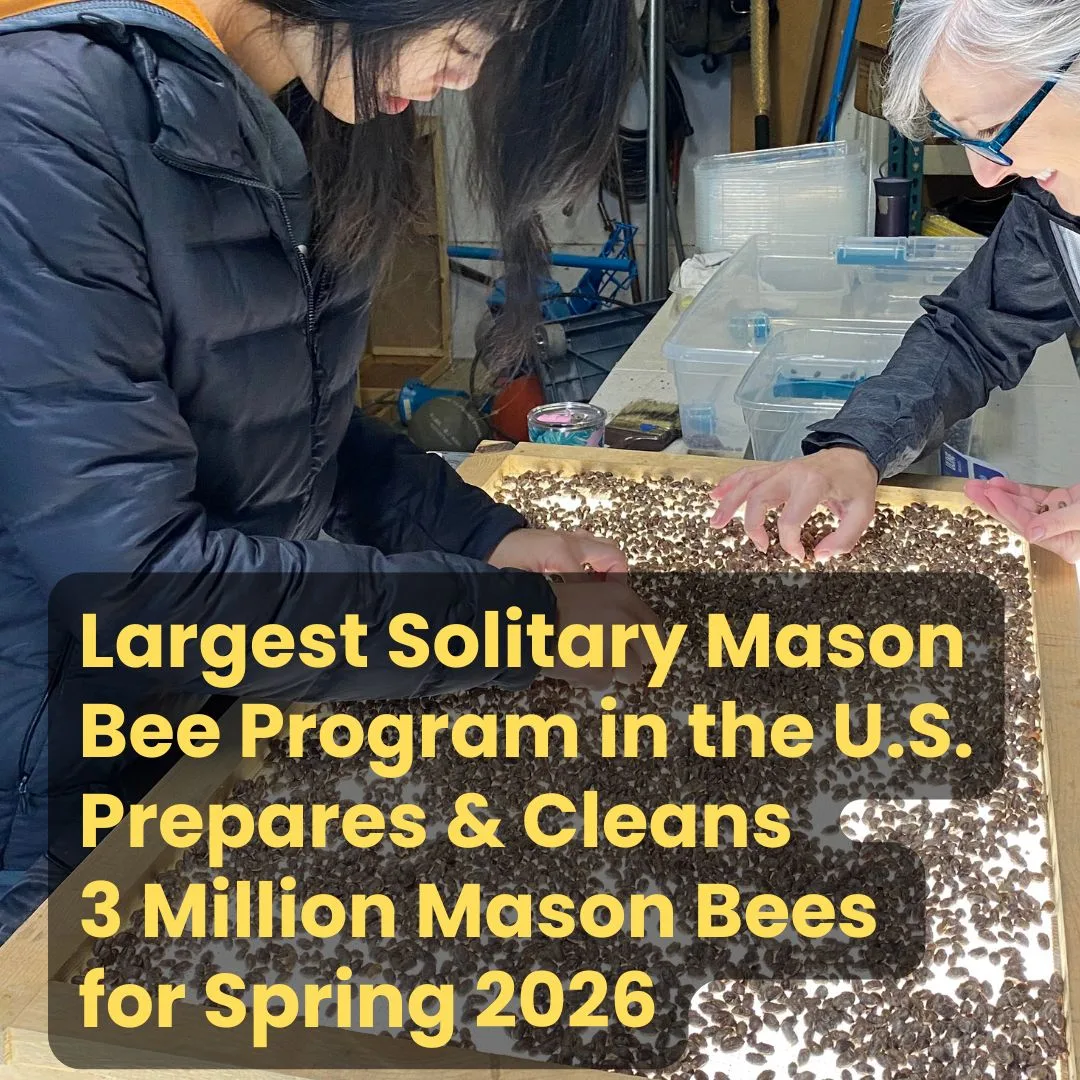
Rent Mason Bees is leading a nationwide effort to educate and empower people to care for mason bees and create healthy backyard habitats. This fall, our team is cleaning and preparing over 3 million mason bee cocoons for the 2026 season—thanks to thousands of dedicated hosts like you.
Together, we’ve built the largest solitary bee rental and conservation program in the United States, creating stronger, more sustainable pollinator populations for future generations.
Why Cleaning Matters
Hidden predators like pollen mites, Houdini flies, and chalkbrood linger inside nesting material, emerging in spring and harming future generations of bees. By cleaning cocoons each fall, we remove these threats so the bees you release in spring are healthy, parasite-free, and ready to pollinate your garden.
Watch How Rent Mason Bee Cleans:
If You Own a Bee Hotel: Learn How to Clean & Care for Your BeesIf you have a bee hotel in your yard, you can take simple but important steps to properly care for your mason bees and protect future generations.3 Steps to Create a Healthy Habitat
Place clean nesting material out in spring. Bees emerge when temperatures reach about 55°F.
Do not leave nesting material out year-round. Remove it at the end of spring—mason bees only live 6–8 weeks.
Clean in the fall. This crucial step removes predators and protects the next generation of bees.
Now is the perfect time to clean! Watch our step-by-step video to learn how
How Our Rental Program Works
Bee hosts release bees into their yards and rent the nesting materials. Depending on your lifestyle, you can choose to RENT—returning your nesting blocks for us to clean—or OWN, taking care of cleaning and winter storage yourself.
Every host—like you—is part of a growing network of citizen scientists working to protect solitary bees and restore balance to our ecosystems.
Thank You for Joining Our Mission and Making an Impact!
Your participation makes this nationwide effort possible. Each nesting block, each cocoon, and each new host helps protect future generations of pollinators.
Solitary bee care changes with the seasons. Our emails help you know what to do next, from spring release through summer care, fall returns/harvest and winter preparation.
We use cookies to run the store. Accept may load Google Analytics and Meta Pixel, and may include an approximate state or region from your IP for shipping and cocoon-release guidance. Reject or Global Privacy Control keeps those tags and region detect off. First-party store books still count visits and the purchase path. A referral or affiliate link you clicked still uses a store cookie so we can apply that offer. Privacy