Blog · Mason Bees · Predators · Bee Care ·
Houdini Fly Update! High report of Houdini! Learn Where

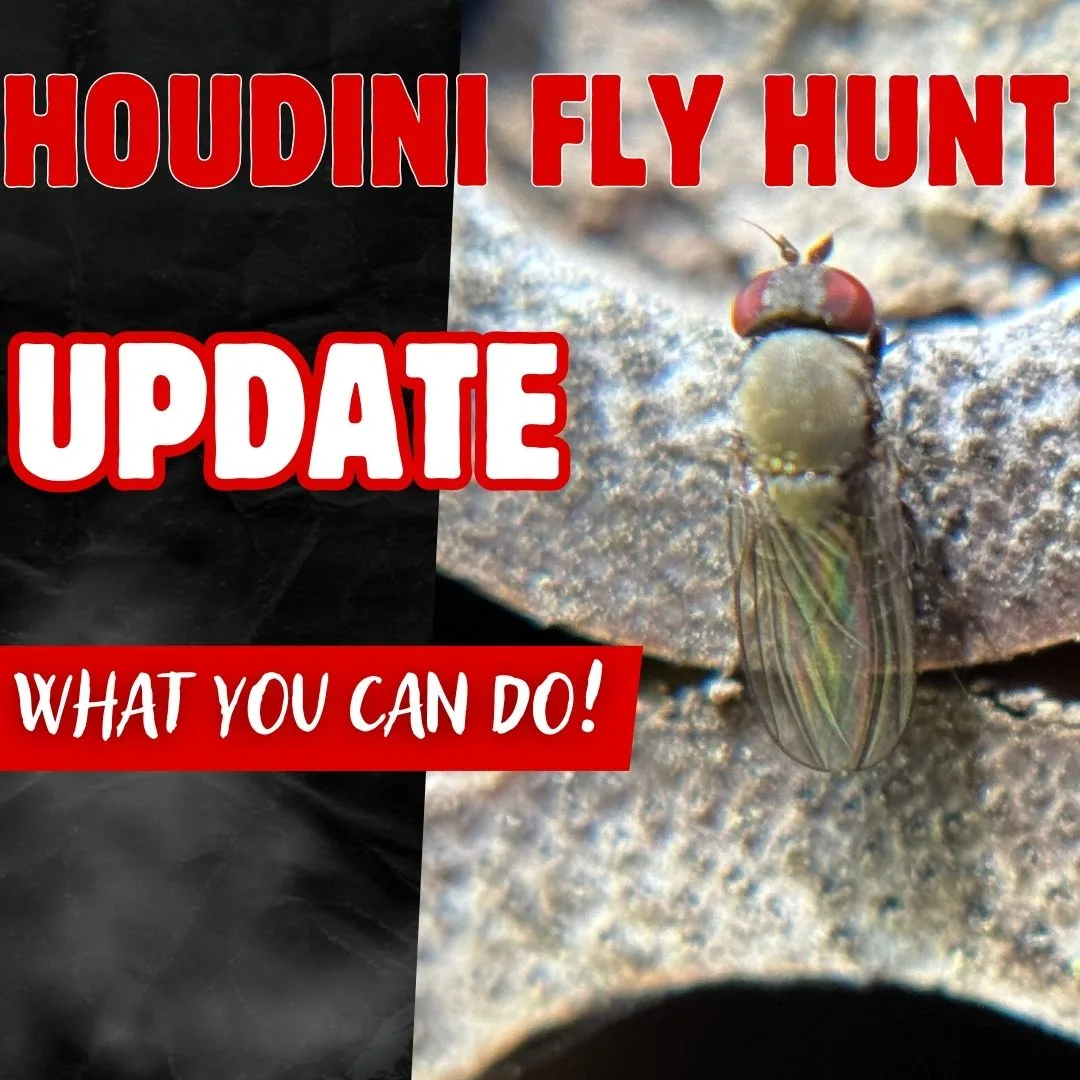
In just one week, we have received nearly 300 reports of Houdini flies, with the majority coming from Washington, Oregon, and British Columbia. Many bee hosts are describing this as the worst outbreak they’ve ever seen, signaling a serious and alarming increase in Houdini fly populations this year.
Here are some ways you can help protect your bees immediately and long-term.
Immediate Protection:
- Set Up a Sticky Barrier: Many people are reporting that they are able to trap the tiny houdini flies using a non-toxic sticky substance, like Tanglefoot, around the rim of your bee shelter. Houdini flies have a tendency to sit on the bee shelter waiting for the mason bees to leave their nesting chamber. Don’t place directly on nesting material where mason bees rest.
Long-Term Steps to Stop Houdini Flies:
- Only Buy Mason Bee Cocoons that Have Been Cleaned:
- Purchase mason bee cocoons that have been properly cleaned to ensure they are free from houdini fly larvae, chalkbrood and pollen mites.
- Never buy bamboo or reed tubes filled with cocoons:
- They may be full or predators and are difficult to open and clean, making them a breeding ground for parasites.
- Instead, choose clean, loose cocoons that you know have been cleaned.
- Use Clean Nesting Materials Every Spring:
- Set out fresh, clean nesting blocks or tubes at the start of each spring season.
- Replace old, worn materials to prevent parasite buildup.
- Harvest and Clean Cocoons in the Fall:
- Open your nesting materials at the end of the season to clean cocoons and remove any pests.
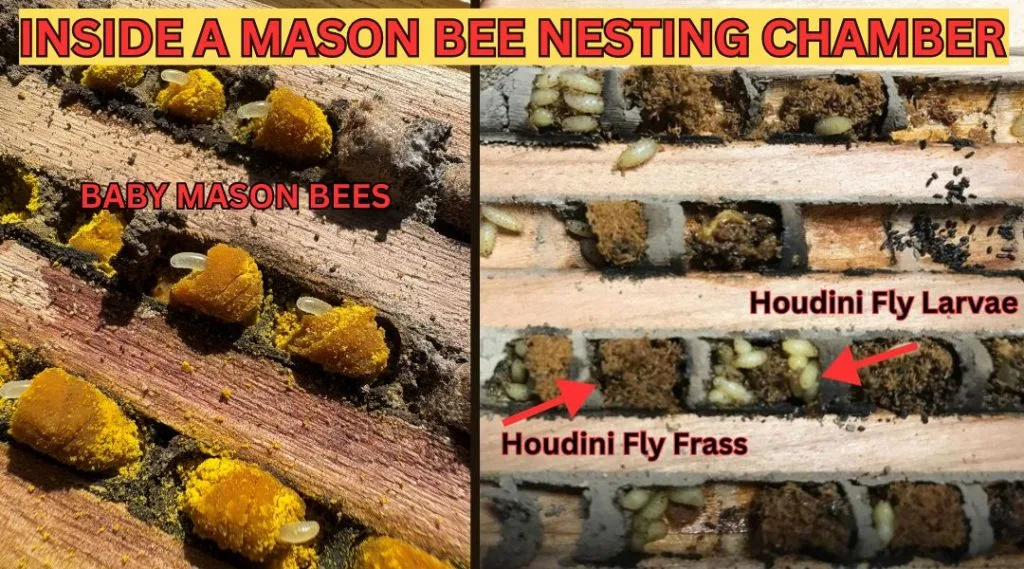
- Look for Houdini fly larvae—small, white maggots found inside the nesting cells. If you spot any… remove and dispose of them. Hot water or burn pile works. (don’t just dump them in yard waste bin or garbage… they will survive).
IF YOU SPOT ANY, PLEASE REPORT THEM HERE Houdini Fly Hunt!
Watch this video to learn how to spot Houdini flies and what their larvae looks like.
By taking these steps, you’re protecting your mason bees and helping prevent Houdini flies from spreading to other areas.