

Learn What Pollen Mites Look Like in a Mason Bee Nest

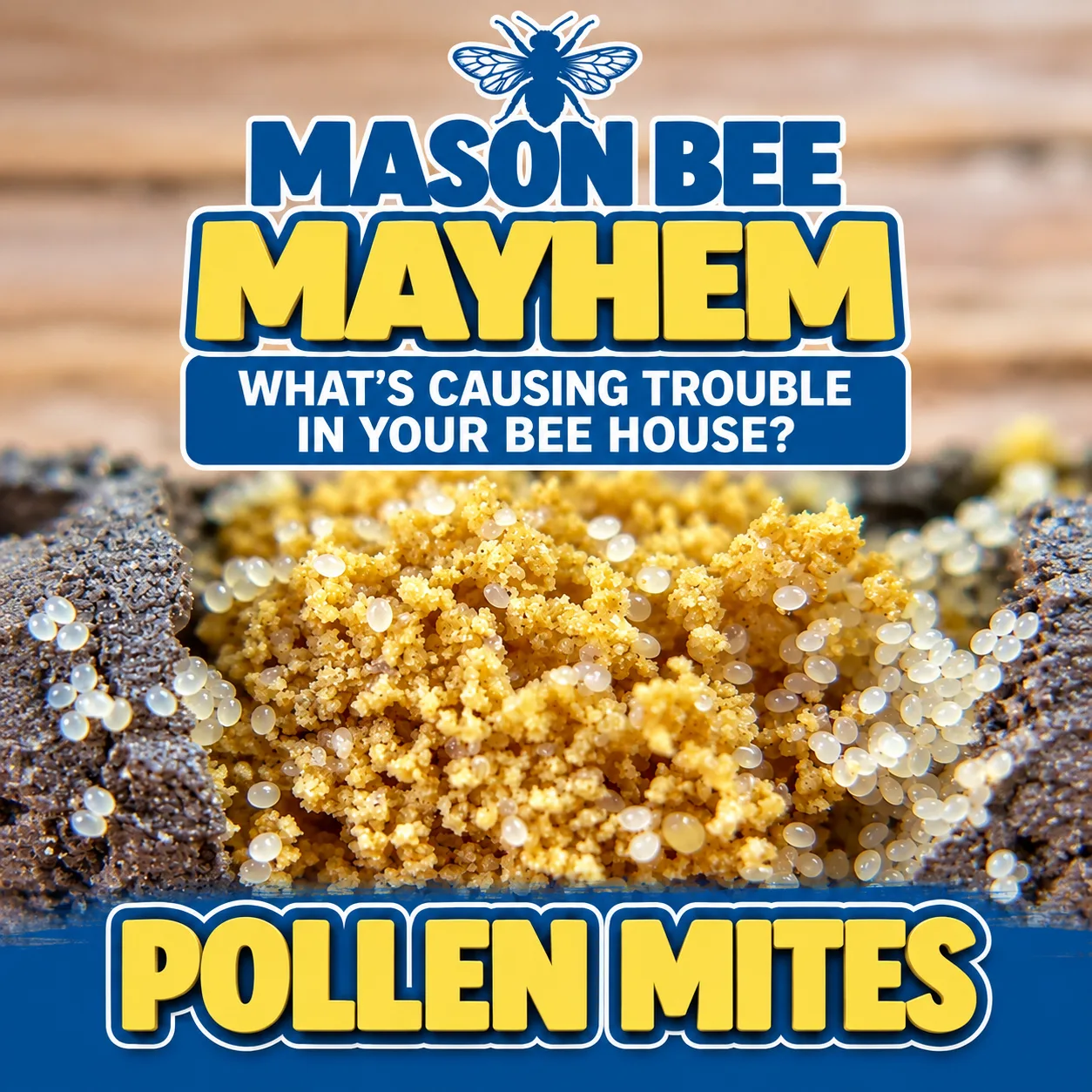
Pollen mites are one of the common things we look for when we open and clean mason bee nesting materials each fall. From the outside, your bee house may look perfectly fine. But once you open the nesting chambers, you can discover an entirely different world inside. In this video, we’re giving you an up-close look inside a mason bee nest so you know what to watch for when caring for your mason bees.
What Are Pollen Mites?
Female mason bees collect pollen and nectar and create a food provision for each developing bee. Unfortunately, pollen mites can also make their way into the nesting chamber and feed on those pollen provisions.
When mite populations become heavy, they can consume the food intended for the developing mason bee. In some nesting chambers, you may find large numbers of tiny, pale mites covering the pollen provision and surrounding nesting material.
That’s why learning to recognize pollen mites is an important part of properly caring for mason bees.
Why Fall Mason Bee Maintenance Matters
Putting up a mason bee house is only the beginning.
After the spring nesting season is over, properly managing your nesting materials can help you discover pests, parasites and disease that you may never see while watching your bees fly in and out of their house.
Opening nesting materials in the fall gives you an opportunity to inspect the cocoons, identify problems, remove unwanted pests and contaminated material, clean reusable nesting equipment, and prepare healthy mason bee cocoons for winter.
A healthy mason bee habitat requires ongoing care and maintenance from year to year.
See What Pollen Mites Look Like Up Close
Watch the video to see pollen mites inside a mason bee nesting chamber and learn what to look for when you harvest your own bees.
Want to Learn How to Harvest and Clean Your Own Mason Bees?
We’ll walk you through the process step by step:
Ever Wonder How We Clean Millions of Mason Bees?
At Rent Mason Bees, we harvest, inspect and clean millions of mason bee cocoons each year. Handling this many nesting blocks gives us an incredible opportunity to see what’s actually happening inside mason bee nests, including pollen mites, parasites, disease and other things you might never notice from the outside.
Take a behind-the-scenes look at our fall harvest:
Learn More About Caring for Mason Bees
The more you understand about what’s happening inside your bee house, the better prepared you are to properly care for the bees that call it home.
Learn more about mason bees, nesting materials and proper bee care at:
Healthy bees start with healthy nesting materials.



