

Blog · Mason Bees · News · Newsletter · Research · Video ·
What We Learned from Backyard Mason Bee Hosts

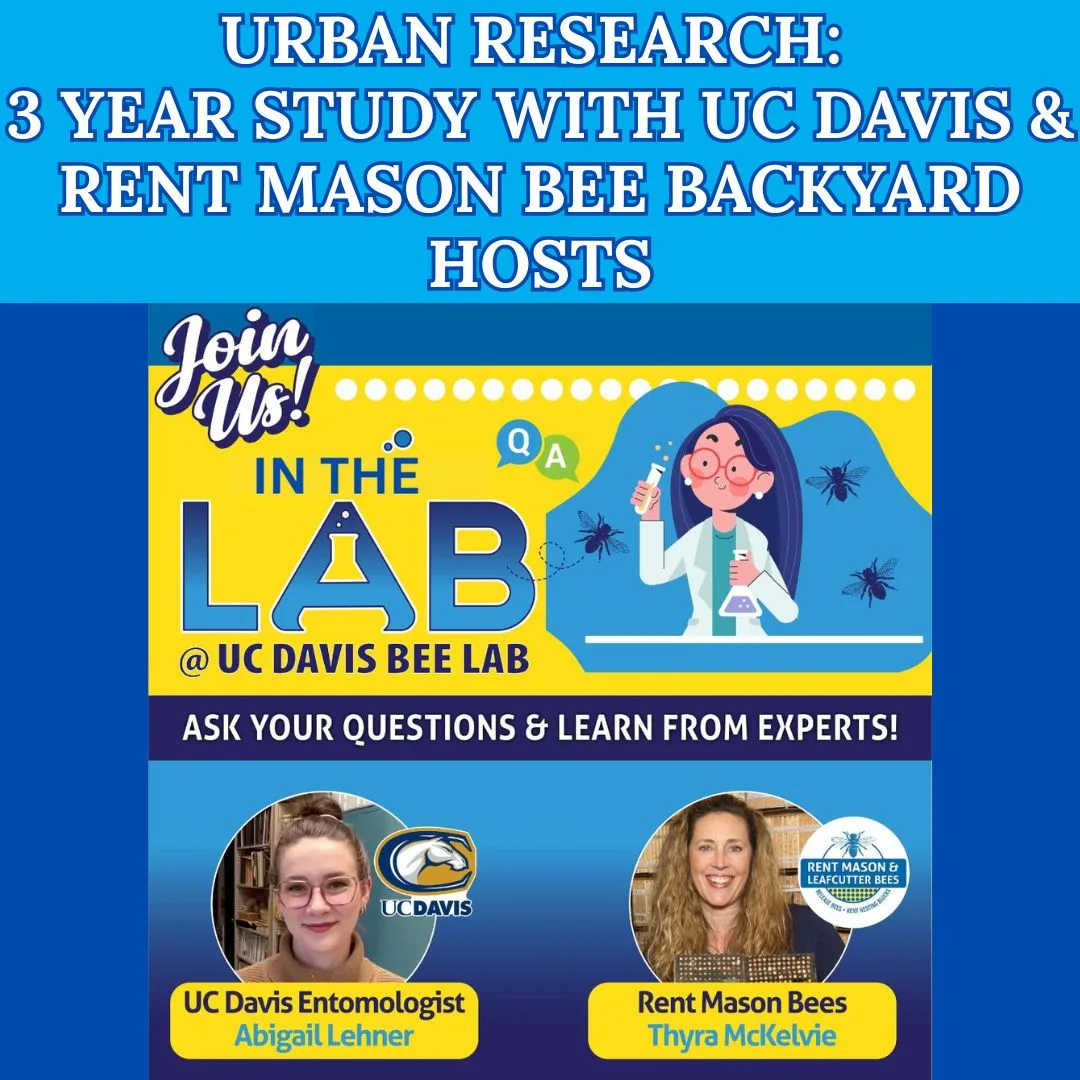
For three years, lead researcher Abigail Lehner at the UC Davis Bee Lab has partnered with Rent Mason Bees to study nesting tubes placed in the backyards of volunteer hosts across the Pacific Northwest. With assistance from high school research interns Adiyson McKelvie and Alexa Douthart, the team measured cocoon size, dissected nests, examined development using X-ray imaging, and analyzed pollen under the microscope to determine which flowers the bees foraged.
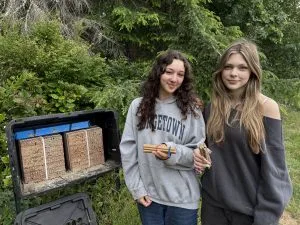
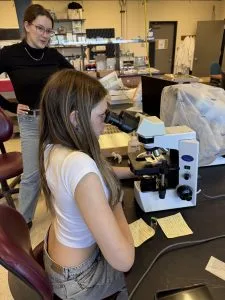
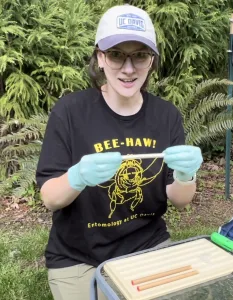
Their findings show that mason bees thrive in both urban and rural areas, proving surprisingly resilient—even in highly developed neighborhoods. The key is simple: clean nests and early-spring flowers.
FROM ABIGAIL: What Were Mason Bees Favorite Food?
Last spring, I came to your houses two times to check out your bees. On the first trip, I collected pollen samples to determine what your bees were eating. I took this pollen and mounted some of it on microscope slides, so that I can count the number of different types and the proportions of each pollen. I extracted the DNA from the rest of the pollen and sent it off to a lab in Canada to get sequencing results. Different plants have different genetic sequences, “barcodes”, that we can use to determine species. By sampling pollen provisions, we are able to determine what flower preferences blue orchard bees have. And I have gotten back the results from a subset of pollen samples I sent off!
Here is the list of plant species that were found in the pollen provisions:
• Maple (Acer spp)
• Willow (Salix spp)
• Cherry and Plum (Prunus spp)
• Bearberry (Arctostaphylos uva-ursi)
• Common dandelion (Taraxacum officinale)
• Laurustinus (Viburnum tinus)
• Strawberry tree (Arbutus unedo)
• Mahonia, Oregon Grape, and Barberry (Berberis spp)
• Evergreen huckleberry (Vaccinium ovatum)
• Leather flower (Clematis spp)
• Ash tree (Fraxinus spp)
• Bluebell (Hyacinthoides spp)
• Elderberry (Sambucus nigra)
• Pacific trillium (Trillium ovatum)
• Rosemary (Rosmarinus officinalis)
• Blueberry (Vaccinium spp)
Based on the sequencing data, it appears that maple is by far the most common plant species the blue orchard bees were using at these sites. But keep in mind, sequencing is not perfect, and these are results from only 15 places (I will be sending more samples out as soon as possible). Blue orchard bees definitely use more plants than this, but this is the data I have available so far. As promised, I wanted to keep all of my wonderful volunteers informed on the results of the study. As I learn more, I will definitely be letting you know!
www.RentMasonBees.com
#rentmasonbees #masonbees



