Blog · Leafcutter Bees · Video ·
The Role of Leafcutter Bees in Farming

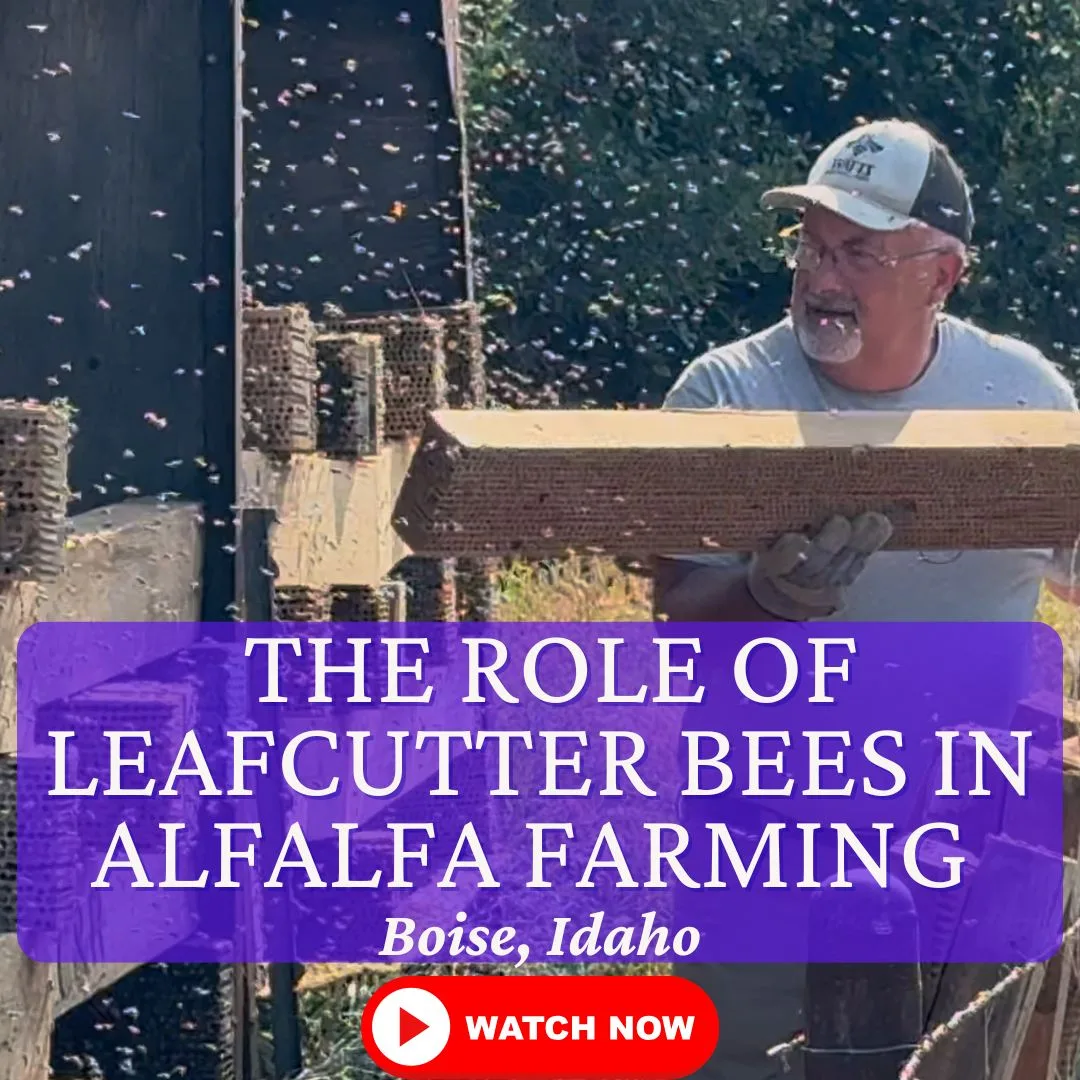
Leafcutter bees rescued North American alfalfa seed production by tripling yields. Alfalfa Leafcutter Bees became critical pollinators—efficiently “tripping” flowers 80% of the time, compared to just 10% for honeybees. Alfalfa, a valuable forage crop, depends on flower tripping to expose its reproductive parts. While honeybees largely avoid this mechanism, leafcutter bees tolerate it and are managed commercially: farmers distribute their cocoons and install nesting shelters across fields. Leafcutter bees triggered a dramatic rise in seed yields—doubling or tripling production in key regions (notably Idaho, Washington, and California), reshaping agricultural practices through saturation pollination. Today, growers maintain these solitary bees by timing their emergence, providing secure nesting sites, and managing brood health—ensuring strong bee populations and sustained pollination year after year
Watch how our leafcutter bees are helping alfalfa farmers in Idaho.