

Blog · Mason Bees · Predators · Research · Video · Bee Care ·
Pollen Mites in Nesting Chambers and on a Mason Bee

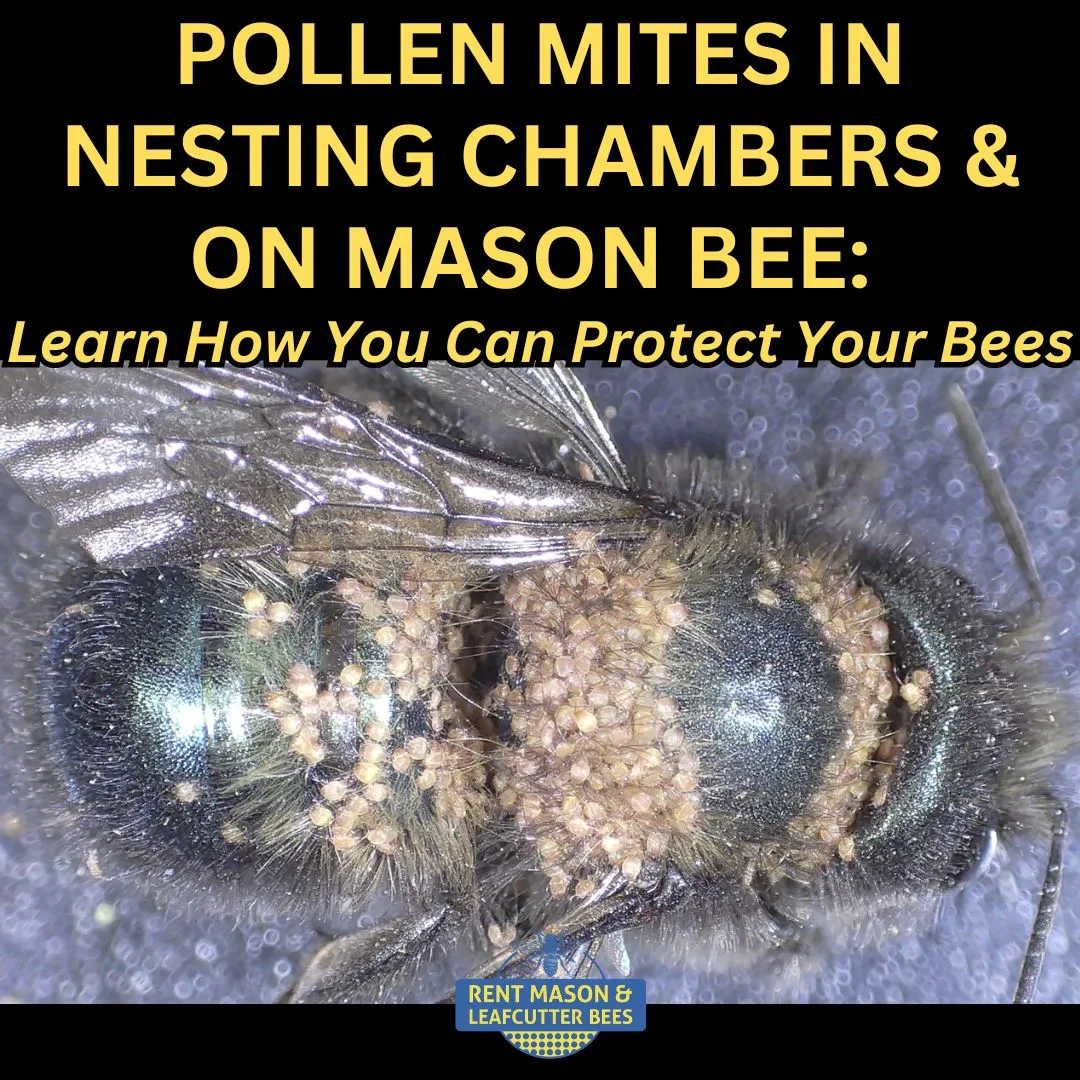
Pollen mites are kleptoparasites that can devastate mason bee populations by overrunning their nests. In this video, we’ll guide you on what to look for in your nesting material, show you pollen mites on the back of a bee, and provide tips on how to protect your mason bees from these harmful parasites.
We are at the forefront of groundbreaking research initiatives, closely collaborating with esteemed research teams and bee laboratories to investigate the ever-increasing threat posed by harmful predators to solitary bee populations. We have been working with the Department of Entomology, University of California, Riverside, CA, USA and have collected pollen mites and sent them to researchers Jacqueline A. Holquinn and Amy C. Murillo to study. They have just published their research article on pollen mites that infest mason bee nests.
Click here to read the article: Full article: Heteromorphic deutonymph sex of the solitary bee parasite, Chaetodactylus krombeini (Baker) (Astigmata: Chaetodactylidae) (tandfonline.com)
Every year, millions of bee hotels are purchased with the good intention of providing homes for mason bees. Unfortunately, many homeowners are unaware of the necessary maintenance, inadvertently putting mason bee populations at risk. Just like honeybee hives, mason bee hotels require regular upkeep. In the wild, mason bees find natural holes that are camouflaged and difficult for predators to locate. However, when you set up a bee hotel, you’re providing easy access for predators. Researchers and industry experts have observed a rise in predators and parasites, significantly threatening these bees. If this issue is not addressed, bee hotels may become infested, further endangering mason bee populations.
YEAR-ROUND CARE: 4 STEPS FOR HEALTHY BEES
1. USE THE CORRECT NESTING MATERIAL: Avoid bamboo or logs with drilled holes, as they can become moldy and cannot be opened. Instead, use stacking trays or cardboard tubes.
2. DO NOT LEAVE BEE HOTELS OUT YEAR-ROUND: Mason bees live only 6-8 weeks. At the end of spring, remove the nesting material from your yard and store it in a cool garage or shed to protect against summer predators like mono wasps and birds. Learn how to store over summer in this video:
3. HARVEST & CLEAN COCOONS IN THE FALL: Fall maintenance is crucial. Remove all predators from the nesting material. Follow the steps outlined below. “How to Harvest Mason Bee Cocoons”.
4. PROVIDE CLEAN NESTING MATERIAL EVERY SPRING: Set out new nesting material each spring. Old bee hotels may harbor predators that can harm emerging bees.
6 STEPS FOR FALL MAINTENANCE
By fall, mason bees have created durable, waterproof silk cocoons and can safely be harvested. For detailed instructions, watch the step-by-step video “How to Harvest Mason Bee Cocoons”.  • How to Harvest, Wash & Store Your Mas…
1. REMOVE COCOONS FROM NESTING MATERIAL: Gently remove all cocoons from the nesting material and prepare them for cleaning.
2. WASH COCOONS: Mason bee cocoons are waterproof and need to be washed in a mild bleach solution to remove pollen mites and chalkbrood.
3. DRY COCOONS: Allow the cocoons to dry overnight so they don’t mold during hibernation.
4. CANDLE COCOONS: Use a flashlight to identify and remove any non-viable cocoons that are amber or see-through.
5. STERILIZE NESTING MATERIAL: If you use stacking trays, use a flame to eliminate any remaining pollen mites or chalkbrood. Replace all cardboard tubes with new ones.
6. STORE IN WINTER HIBERNATION: Place the cleaned cocoons in a humidity-controlled container and store them in your refrigerator over the winter.
By taking care of your mason bees, you will help them emerge safely the following spring. Many homeowners love hosting mason bees due to their gentle behavior and efficient pollination skills, making them an increasingly popular choice for backyard pollinators. While some bee enthusiasts find fulfillment in the continuous care and cleaning of mason bees throughout the year, others may prefer a more hands-off approach. For those interested in supporting solitary bee populations and enhancing pollination in their yard without the responsibility of cleaning and storing mason bee cocoons during the winter, Rent Mason Bees offers a convenient program. This program provides everything you need to host mason bees, including the release of bees and the rental of nesting blocks, and handles all the cleaning and maintenance for you.



