

Blog · Uncategorized · Bee Care ·
Mason Bees Need Mud: 3 Easy Ways to Provide It

One of the most common questions we hear from new mason bee hosts is:
“Do mason bees really need mud?”
The answer is yes — mud is essential.
Female mason bees use mud to build protective walls between each baby bee inside their nesting tubes. Each chamber contains a pollen loaf and a single egg. The mud partitions protect developing bees from predators, parasites, and weather.
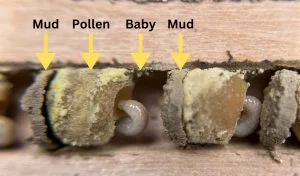
Without nearby mud, mason bees may struggle to finish building their nests.
The good news? Providing mud for mason bees is incredibly simple. You will want to make a mud hole 5-10 feet from your bee house.
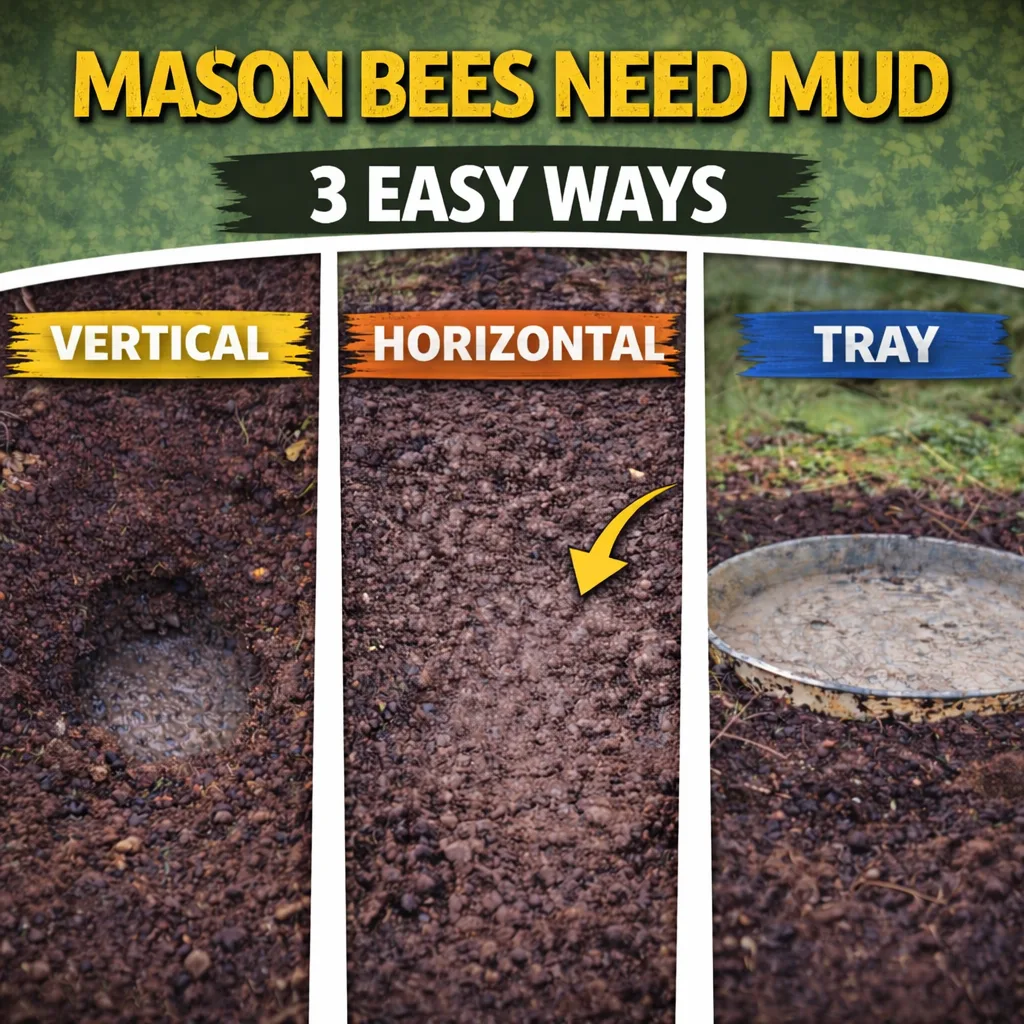
Here are three easy ways to make a mud source in your garden.
1. Vertical Mud Hole
A vertical mud hole mimics natural clay banks that mason bees often use in the wild.
To create one:
-
Dig a small hole about 6–12 inches deep near your bee house.
-
Add clay and water to the soil.
-
Mix until the soil becomes soft, sticky mud.
The vertical wall makes it easy for mason bees to land and collect mud with their mandibles.
2. Horizontal Mud Patch
Another easy option is creating a horizontal mud patch on the ground.
To do this:
-
Choose a small area 5-10 feet near your mason bee house.
-
Mix soil and water until it becomes sticky clay-like mud.
-
Keep the area moist during the spring nesting season.
You may even see female mason bees landing, gathering a tiny ball of mud, and flying back to their nesting tubes.
3. Ground-Level Mud Tray
If your soil drains quickly or is sandy, a mud tray works beautifully.
To create a mud tray:
-
Place a shallow tray or dish even with the ground
- Poke holes in the bottom of the tray to let water drain.
-
Fill it with clay
-
Add water and mix until it forms sticky mud.
This method allows you to easily control moisture and ensures your bees always have access to mud.
Why Mason Bees Need Mud
Mud is a critical building material for mason bees.
Female mason bees use mud to create partitions between each developing bee inside their nesting tunnels. These mud walls protect the larvae while they develop inside their cocoons.
Without mud, mason bees may abandon nesting tubes or be unable to complete their nests.
Providing mud helps ensure a healthy next generation of mason bees in your garden.
Mason Bees Are Incredible Pollinators
Mason bees are gentle, solitary bees and are among the most efficient pollinators in the world. One mason bee can pollinate as many flowers as 100 honeybees.
They are excellent pollinators for:
-
fruit trees
-
berries
-
backyard gardens
-
early spring flowers
Supporting mason bees helps increase pollination and encourages a healthy ecosystem.
Watch the Video
In this video, we show three easy ways to create a mud source for mason bees so they can successfully build their nests and raise the next generation of pollinators.



