

Blog · Mason Bee House Makeover · Mason Bees · Out with the Old. In with the New · Predators · Video · Bee Care ·
Bee House Makeover: Mold and Predators

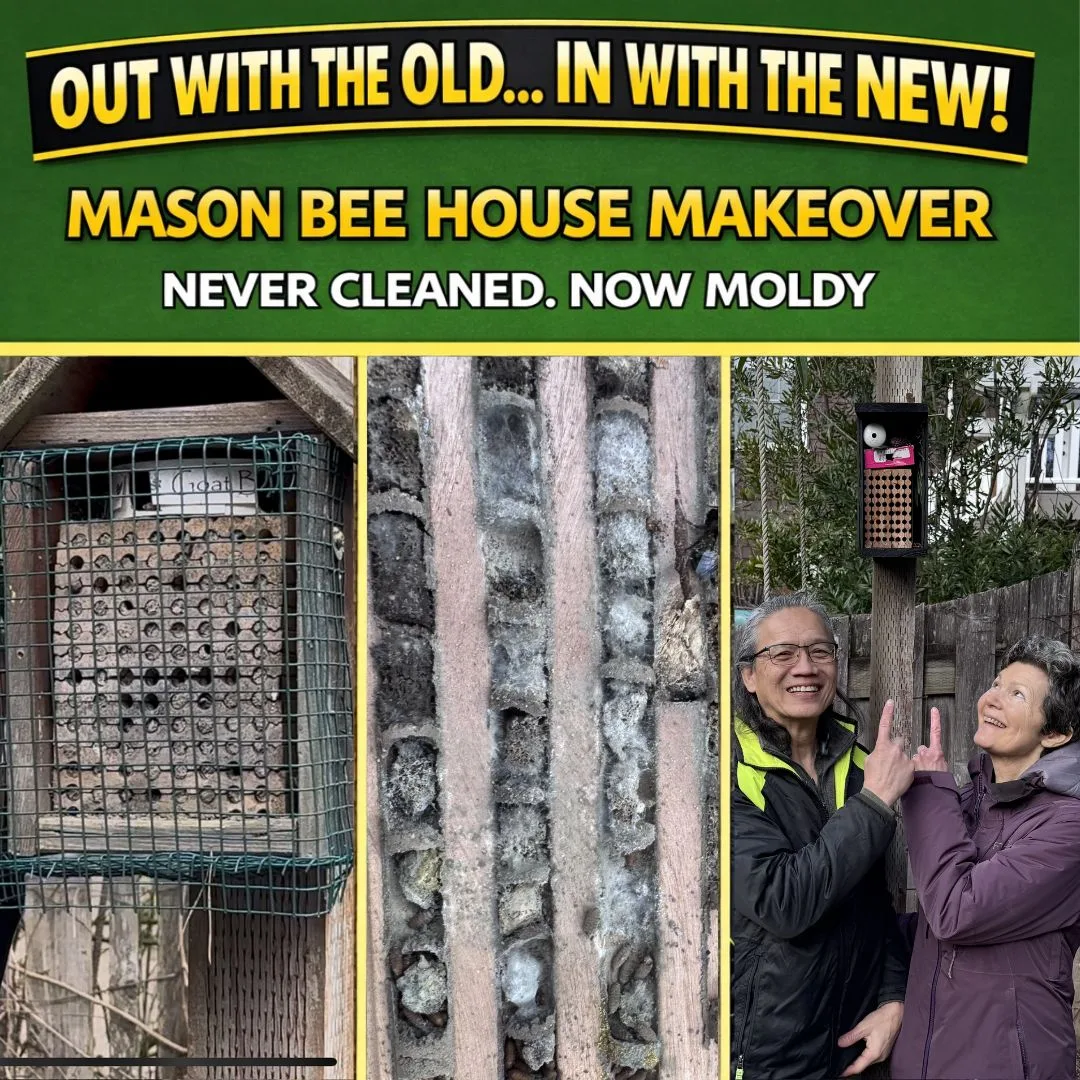
OUT WITH THE OLD. IN WITH THE NEW!
Many backyard bee houses look helpful for pollinators, but when nesting material is never cleaned, it can actually become harmful to mason bees.
In this Backyard Mason Bee House Makeover, we visit a homeowner whose bee hotel had never been opened or maintained. Over time, moisture, mold, and pests built up inside the nesting chambers, putting developing mason bee cocoons at risk.
Solitary bees naturally spread out their nests in the wild. When we provide bee houses with nesting material that cannot be opened and cleaned, predators and disease can build up year after year. Instead of supporting pollinators, dirty nesting material can turn into a predator habitat.
Why old nesting material can harm mason bees
Mason bees are gentle, solitary pollinators that nest in small tunnels. Each female bee carefully collects pollen and nectar, lays an egg, and seals each baby inside its own chamber using mud walls.
When nesting material is not cleaned annually, common problems can occur:
• Mold growth from trapped moisture
• Pollen mites and other parasites
• Houdini flies that invade pollen provisions
• Wasps and other predators
• Reduced survival of healthy cocoons
Over time, dirty nesting material can reduce bee populations instead of helping them thrive.
What we found inside this bee house
Inside this bee house, we discovered nesting chambers that had never been opened or cleaned. Mold had developed inside the tunnels, and debris had accumulated around the cocoons.
Because mason bees only live about 6 to 8 weeks in spring, their developing young remain inside nesting chambers for many months. If nesting material is not maintained, the next generation of bees can be exposed to harmful conditions.
The solution: transition to healthy nesting material
Healthy mason bee habitat starts with nesting materials that can be opened and cleaned each year.
Better options include:
• Stacking tray systems that open easily
• Cardboard tubes and liners that can be replaced annually
• Nest blocks designed for annual maintenance
Avoid bamboo or drilled wood blocks that cannot be opened and inspected.
When nesting materials can be cleaned, you can:
• Remove pests and predators
• Prevent mold buildup
• Protect healthy cocoons
• Support stronger pollinator populations
Out with the old. In with the new.
In this makeover, we helped transition this bee house from moldy, unhealthy nesting material to a clean, maintainable setup that supports healthy mason bee populations.
Small improvements in habitat can make a big difference for pollinators.
By providing clean nesting material each spring and maintaining it each fall, backyard gardeners can help mason bees thrive for years to come.
Follow the series
This video is part of the Mason Bee House Makeover series, where we visit real backyard bee setups and help homeowners transition from harmful nesting material to healthy habitat for mason bees.
Each episode shows real examples of:
• Moldy nesting material
• Predator problems
• Bamboo and drilled log concerns
• Healthy nesting upgrades
• How to protect developing cocoons
If you would like help creating a healthy mason bee habitat, explore our nesting materials and pollinator supplies designed for annual cleaning and long-term bee health.
Healthy homes help healthy bees.



