

Blog · Mason Bees · News · Predators · Research · Video ·
Inside the Houdini Fly Research Project

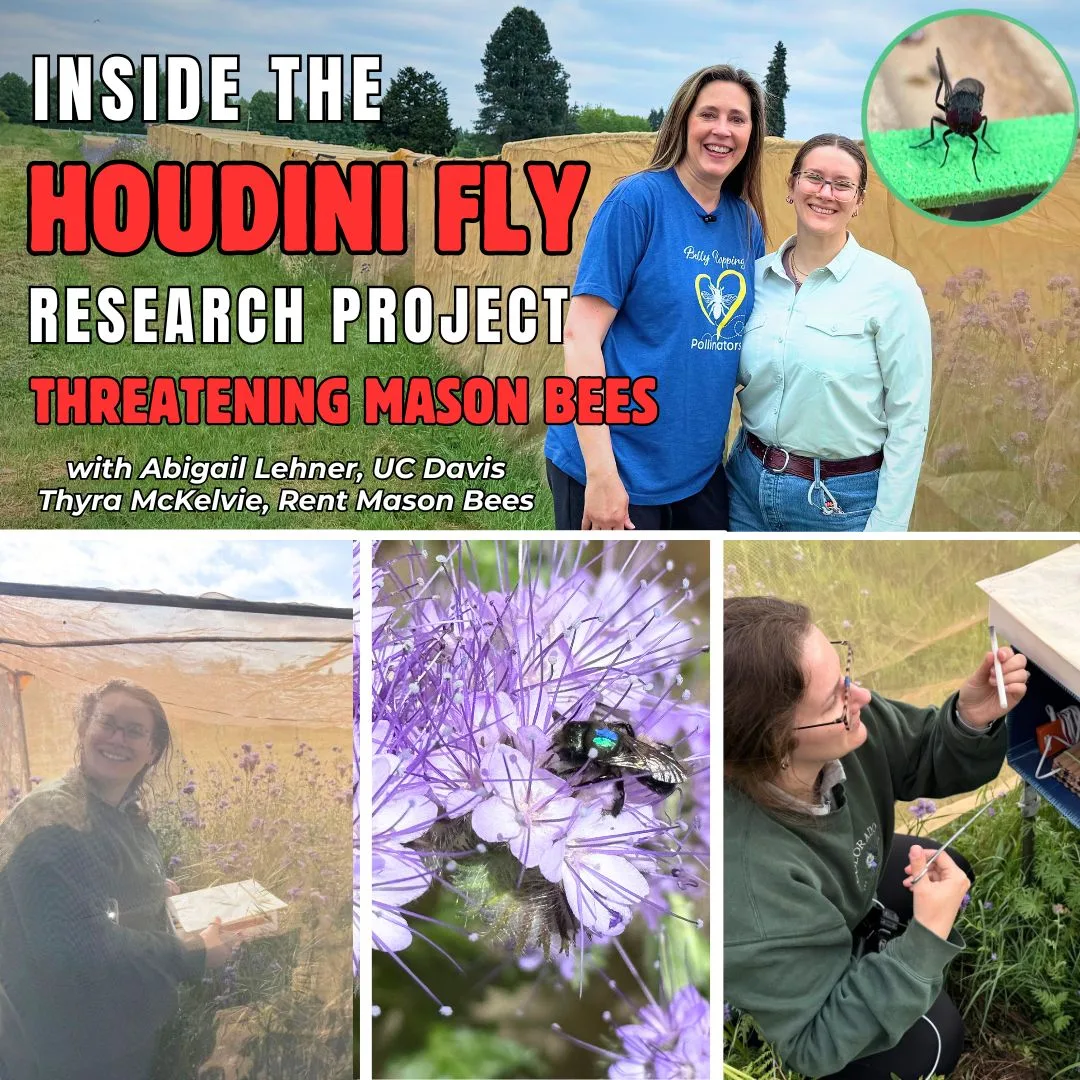
Step inside the Houdini Fly research project in Aurora, Oregon, where we joined researcher Abigail Lehner from UC Davis to study one of the newest threats facing mason bees.
Inside these experimental insect cages, mason bees and Houdini flies have been released together so researchers can closely observe their behavior, reproduction and how infestations spread. The goal is to better understand this invasive predator and develop ways to help protect solitary bees.
Houdini flies originated in Europe and are now spreading across North America in alarming numbers. These tiny kleptoparasites lay their eggs inside mason bee nests. Their larvae consume the pollen provisions meant for developing baby bees, causing the mason bee larvae to starve. While a mason bee may only lay around 15 eggs in her lifetime, a single Houdini fly can lay up to 500.
In this video:
• What we’ve learned
• UC Davis lab research
• What we are studying inside the cages
• What bait traps we are using
• How to make bait traps at home
• What is working to catch Houdini
• What you can do next season
• How to remove Houdini larvae in the fall
Researchers have now confirmed Houdini fly in North America on the West Coast, East Coast and in western Canada. This collaborative project brings together scientists from UC Davis, Penn State and Rent Mason Bees to better understand this growing threat and help protect future generations of mason bees.
Watch here:
Subscribe to our YouTube Channel



