
Blog · Mason Bees ·
How to Build a Mason & Leafcutter Bee House: Dimensions, Hole Sizes & Best Wood

Choosing Nesting Holes You Can Clean
When you set out nesting holes for solitary bees, use materials you can easily open and clean in the fall. Stacking trays and cardboard tubes are easy to open and clean. Bamboo and drilled logs can't be opened, so cocoons can't be cleaned or protected from predators.
Tip: if you love the look of a drilled log, drill the holes a little bigger and slide cardboard tubes inside. In fall, just pull the tubes out to clean them.
The 3 Most Important Steps to Hosting Mason Bees
- Spring: set out clean nesting material.
- End of spring: take the nesting material down. It doesn't stay out year-round. Adult mason bees are active for only 6–8 weeks. After that, store the nesting material in a cool garage or shed while the next generation develops and settles into hibernation.
- Fall: open all your nesting material to remove predators and clean the cocoons. Then store the cocoons in your refrigerator for winter hibernation.
🎥 Watch: How We Clean 3 Million Cocoons vs. How You Clean Your Own Cocoons on a Small Scale
Want to Build Your Own Bee House? Here Are the Dimensions You'll Need.
Nesting hole sizes
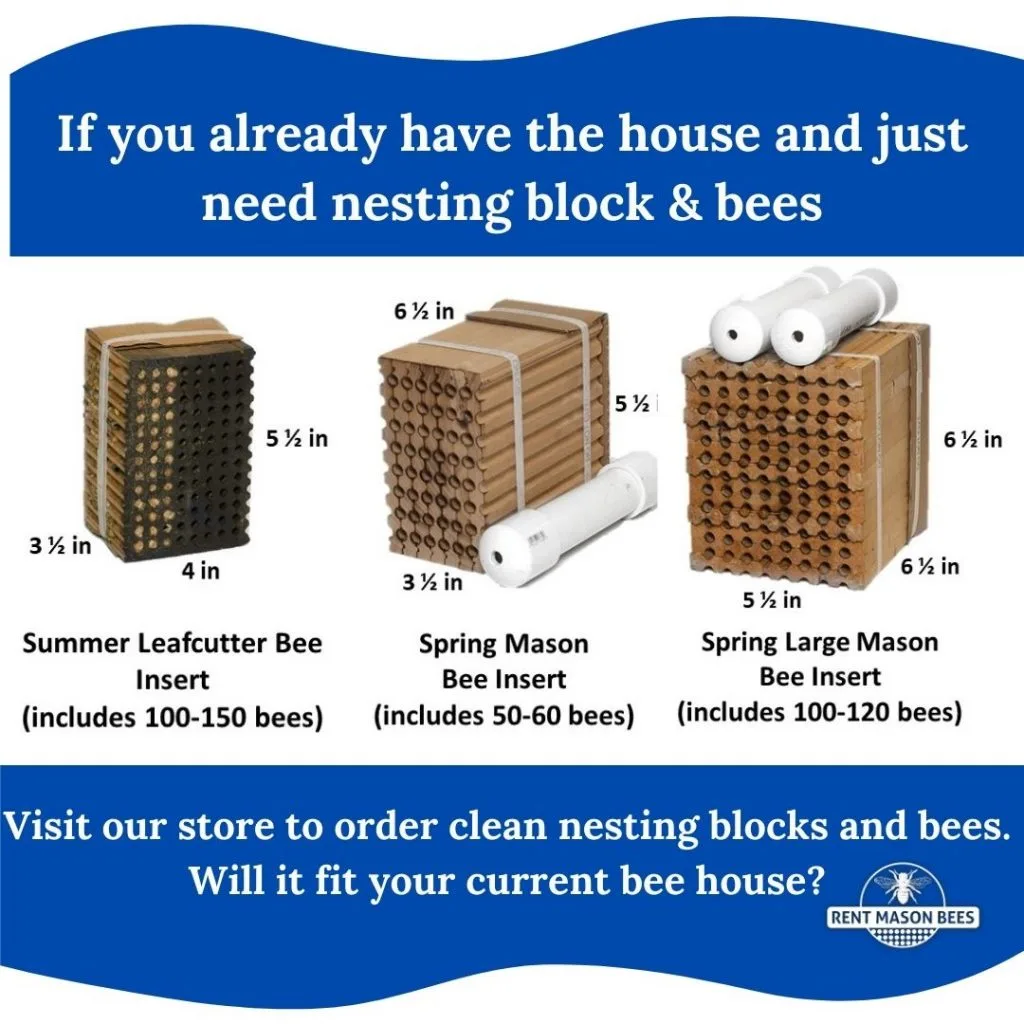
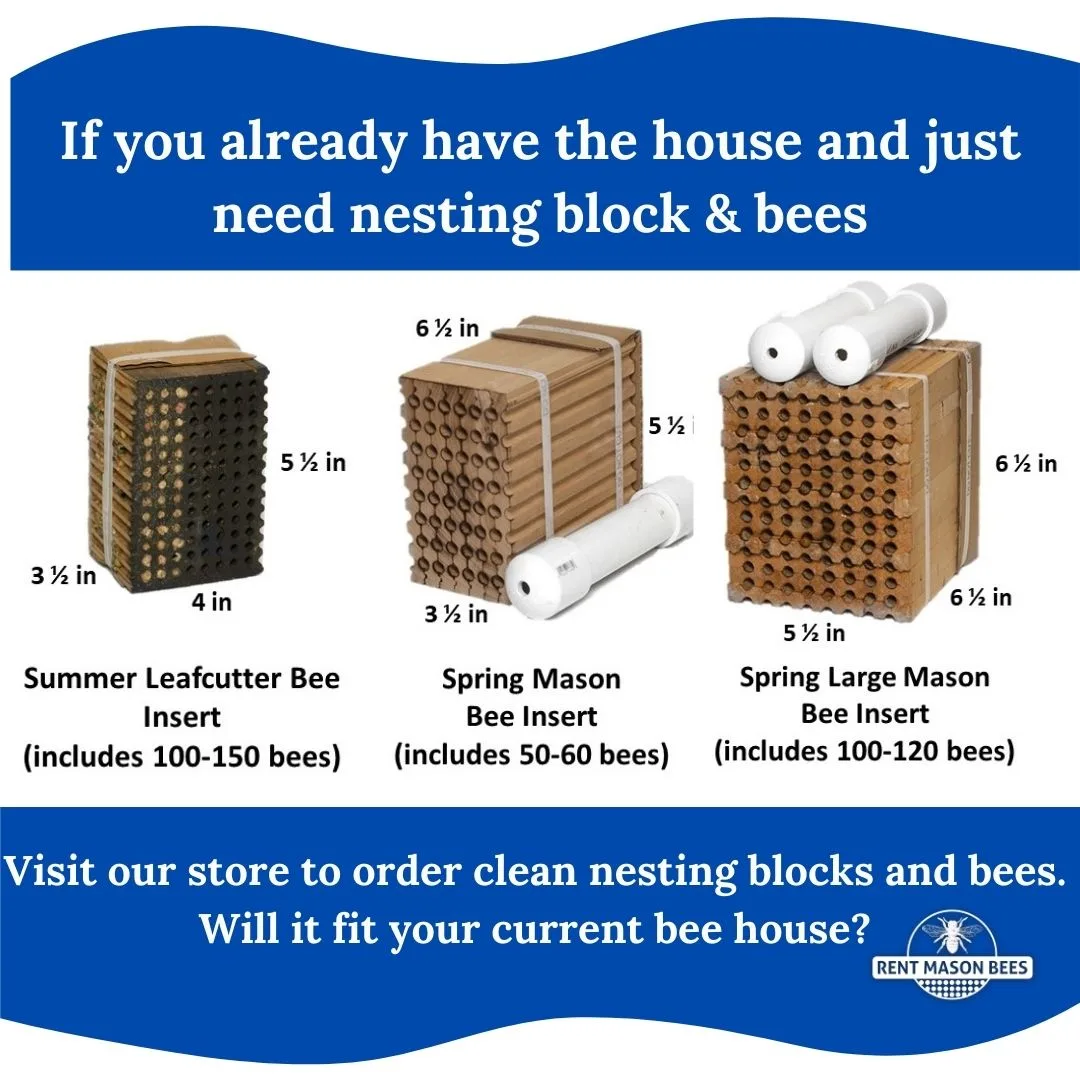
- Mason bees: 8 mm diameter, 6" long
- Leafcutter bees: 6 mm diameter, 3" long
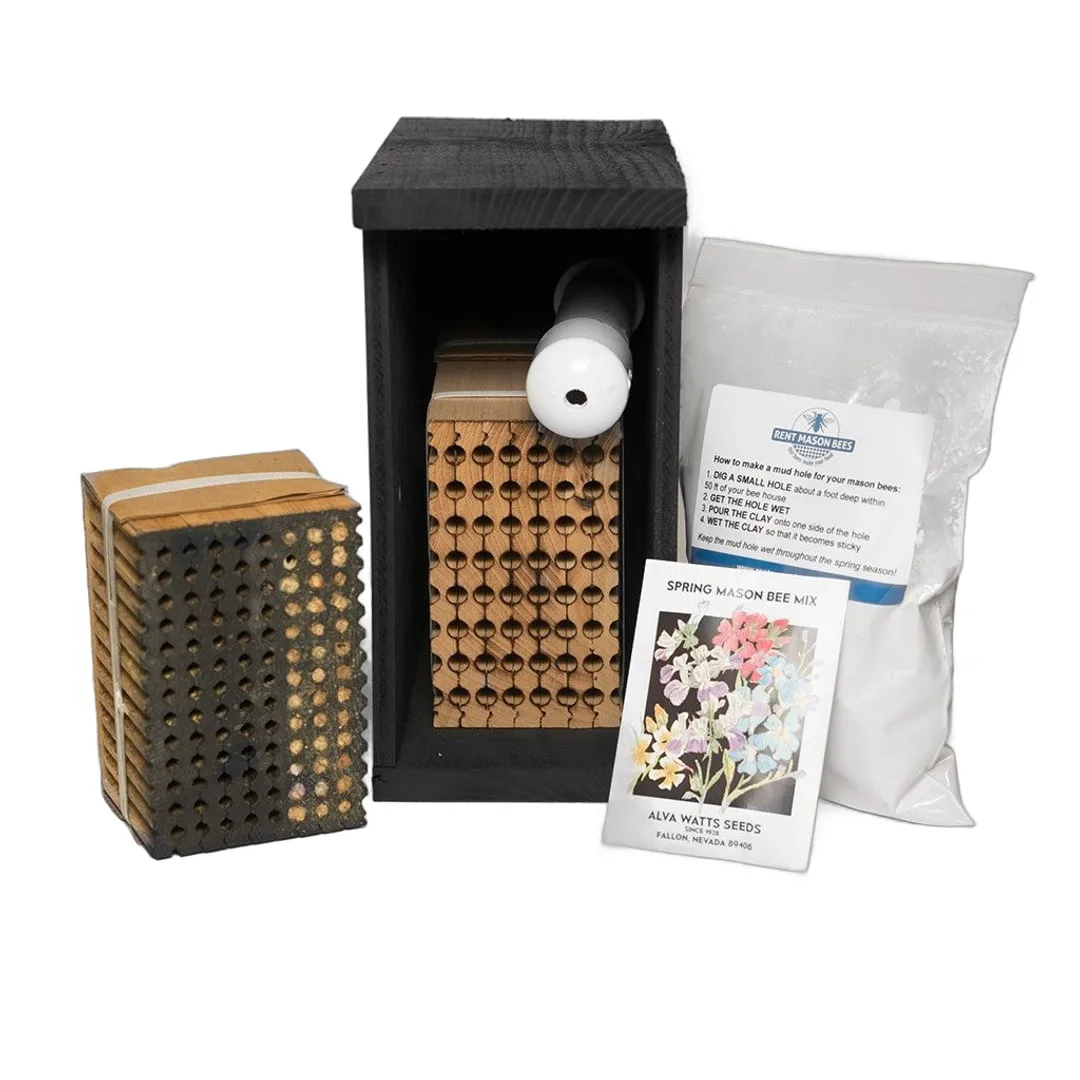
Stacking trays
Our stacking trays are made from alder. If you make your own, use only untreated, chemical-free wood. Treated wood can harm developing bees.
Release tube
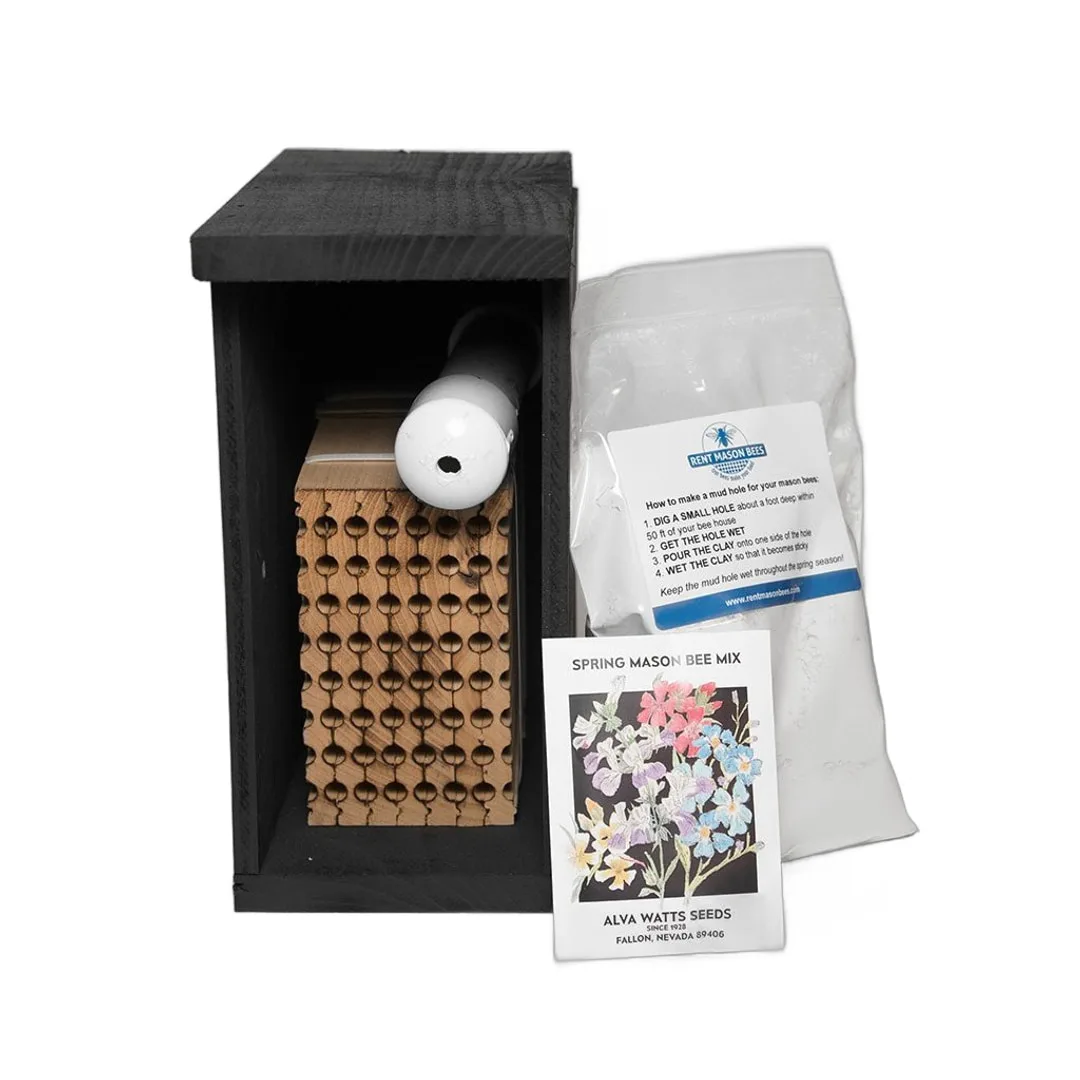
Our white PVC release tube is 1" pipe, 6" long, with a cap on each end and an 8 mm hole drilled in one cap.
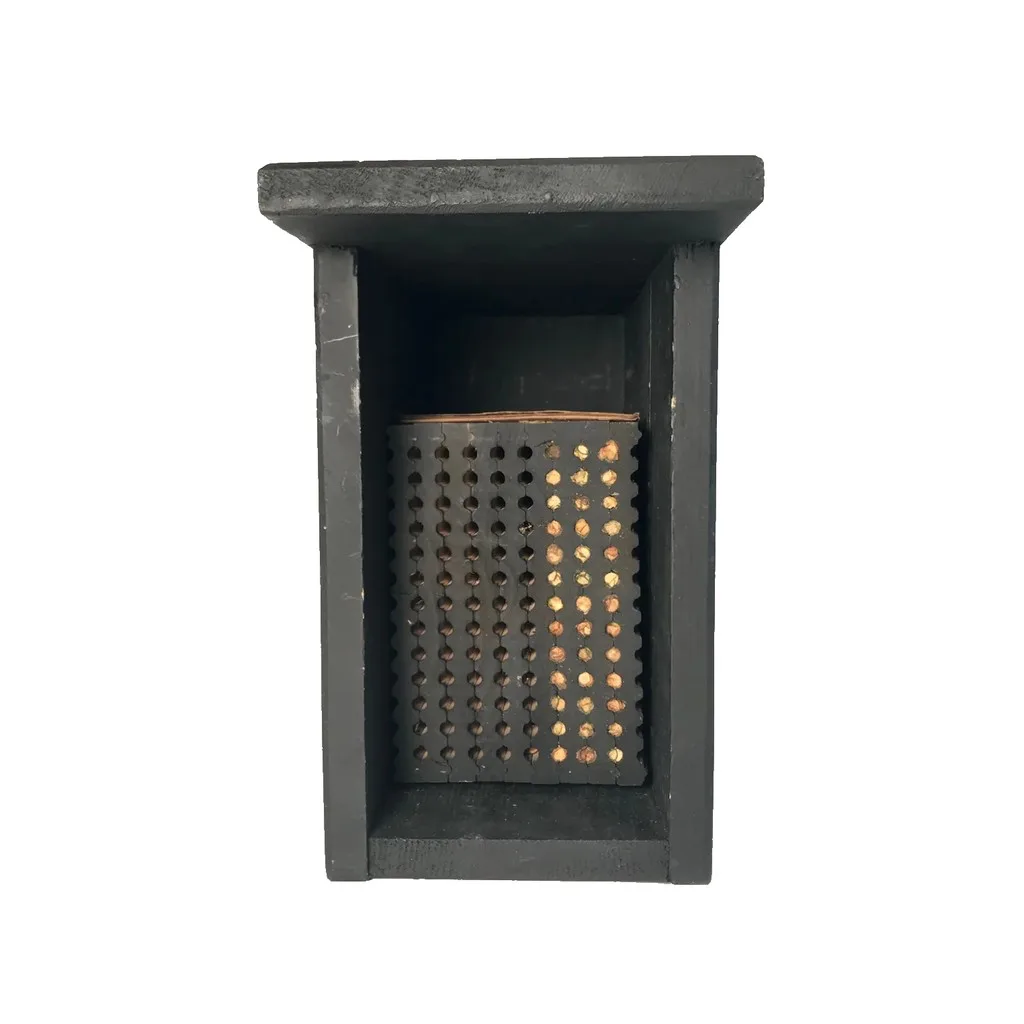
Black shelter house
- Width: 4"
- Height: 8.5"
- Depth: 8"
- Materials: cedar and plywood
Repainting your house?
We use Rust-Oleum Painter's Touch 2X Flat Black General Purpose Spray Paint.
Shop nesting blocks, bees and supplies at RentMasonBees.com