

Blog · Uncategorized · Bee Care ·
Where are my mason bees and why are no holes plugged?

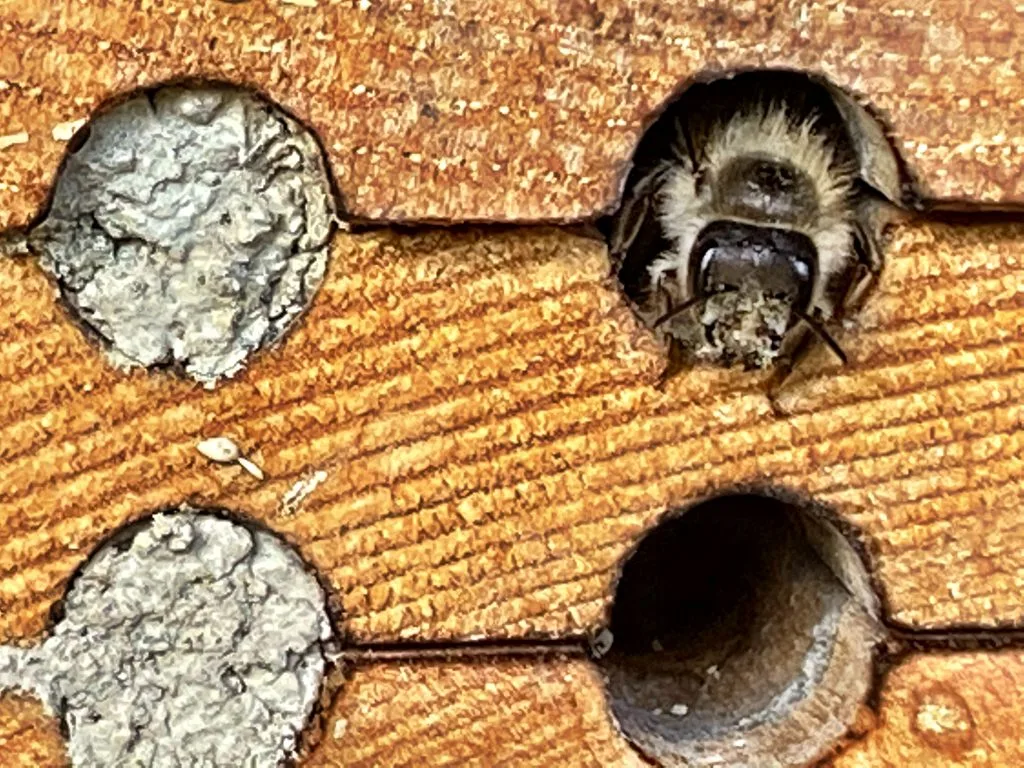
We know it can be very disappointing when your mason bees don’t fill many holes, but we want to reassure you that you’ve still impacted solitary bee populations and helped your habitat. The success of our program starts as soon as you release solitary bees back out into the environment. Since solitary bees are such incredible pollinators, when you released them into your yard you helped create a healthier ecosystem by strengthening your trees and flowers that will provide cleaner air, stabilize soils and support other wildlife. You’ve also helped grow the local population of solitary bees, which are commonly eliminated or reduced from urban areas as they are being developed.
Spring weather plays a huge role not only with mason bees, but flowering trees that bloom in early spring and rely on pollination. This unfortunate process is called phenological mismatch, which is where the time trees and plant blooms don’t match up with the emergence of pollinators. Plants receive less pollination and pollinators don’t get enough food, really not a great situation to be in. Mother nature has been very harsh on us this past year with freezes and heat waves, as well as random jumps and dips in temperature which throws off a lot of plant bloom timing. When it comes to all plants, native or non-native, they may adapt to survive where they’re planted, but their circadian clock will always take cues from the temperature.
Let’s do some bee investigation to try and figure out if your bees were impacted by weather or something else:
- When did you get your bees?
- Did they go out right away or did you stick them in the fridge? If fridge, how long were they in fridge and did you check for emergence while they were in there?
- Do you see any scent marks on the white tube? They look like mud marks, those are the males scent marks.
- Are you or your neighbors using any pesticides or sprays? Any sprays or chemicals will harm sensitive pollinators.
- Is there a clay source? If not, they’ll fly off to find sticky/muddy clay for their babies
- Is there a food source? If your bees emerged and there was no food, they’ll fly off in search for food. Make sure you have early spring blooms. Mason bees don’t like daffodils, tulips or rhododendrons. They’re favorite are Heather, Pieris Japonica OR visit Pollinator.org to learn what to plant.
- Has there been a lot of rain? Mason bees are hardy bees and can fly in drizzle or light rain, but heavy rain they’ll seek shelter and not be able to fly. This may throw them off and they may not find their way back to your nesting block and find natural holes in your habitat.
- Was there daytime freezing or snow after they emerged? If so, how many days? Did it damage the blooms? (They can survive just fine in cooler temps at night, just the daytime temps need to be 45+ degrees).
- Was your black bee house placed South facing in the morning sun?
Bee Science:
Now let’s investigate the contents of your PVC tube where all the cocoons are. On a paper towel or piece of paper, dump out all the contents and examine the cocoons. If they all have a hole in it, then they emerged. If not, set the ones aside that haven’t opened and you can snip the tip off the cocoon to examine them (see video above)
If All Your Cocoons Are Empty, That Is Great News! It Means All Your Bees Emerged and Are in Your Yard Pollinating. They Just Found Other Holes in Their Habitat to Lay Their Babies.
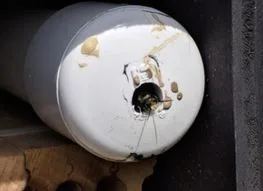
If your black house was hung in warm morning sun, you had mud nearby, food as soon as they emerged and didn’t use pesticides or sprays, then you did nothing wrong. I know it’s fun to watch them fill holes, but you must have a great habitat where they found natural holes (a couple of mine even filled the holes on my deck umbrella… LOL!).
If you’ve determined by answering the questions above that it is not weather related, then something you can try next year is moving the location of your black house. Sometimes a different spot is closer to a food source and they prefer it better. Other times, it’s just a matter of preference and we never know year to year what mason bees will prefer. .



