

Blog · Mason Bees · News · Video ·
Rent Mason Bees on KING5 News

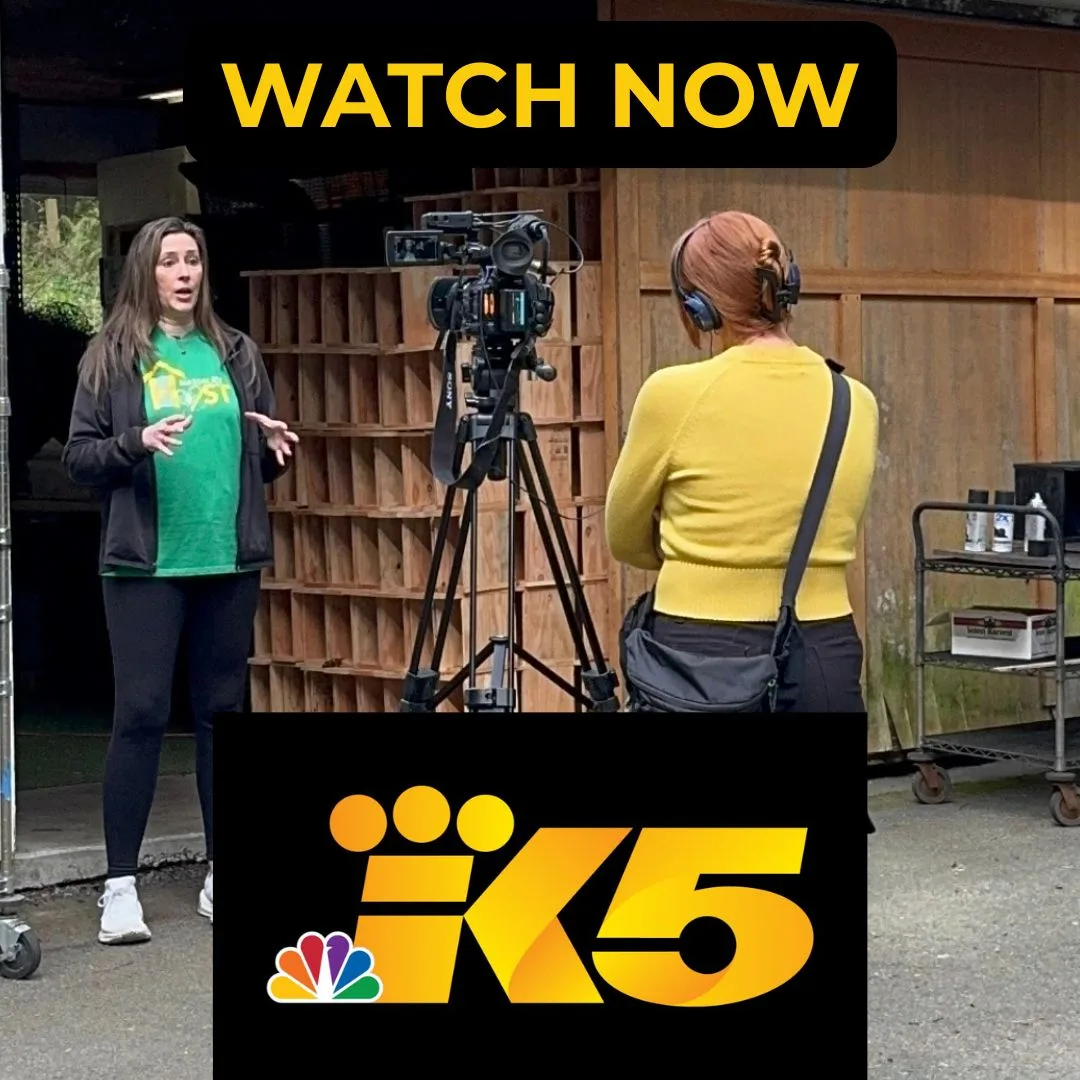
Leah Pezzetti, from KING5 News, stopped by our shop in Bothell this week to learn more about mason bees and do a story about our program. In the same segment, she also met with Katie Buckley, the Washington State Department of Agriculture’s pollinator health coordinator, to learn about new species of bees in Washington State.
Watch KING5 News Segment, featuring Rent Mason Bees – WATCH NOW
Washington is home to around 600 bee species across six families. Most native bees are solitary species, meaning each female builds her own nest, collects pollen for her offspring, and lays her own eggs without the help of worker bees. Honey bees are not native to Washington, or even to North America — they were brought by European colonizers for honey and wax production.
That’s where a company like Rent Mason Bees, based in the Pacific Northwest, comes in. Managing Director Thyra McKelvie has spent a decade educating the public about solitary bee care. Rent Mason Bees is the largest solitary bee provider in the country, harvesting and cleaning more than three million mason bee cocoons annually.
McKelvie explained what makes solitary bees such powerful pollinators. Unlike honey bees, which carry pollen in sticky sacs on their hind legs and pollinate only about 5% of the flowers they visit, mason bees have tiny hairs called scopa covering their bodies. They belly-flop onto flowers, get completely coated in loose pollen, and end up pollinating roughly 95% of the blossoms they land on, visiting up to 2,000 per day.
“If you have fruit trees or if you have anything in your garden you need pollinated, you want mason bees,” McKelvie said. “They are your super pollinators that will get everything pollinated in your yard, lots more food to grow.”
The stakes of understanding and protecting these species extend far beyond backyard gardens. Buckley warned that the consequences of losing bees could cascade through entire ecosystems.
“If you don’t have pollinators, you don’t have flowering plants. And most of the plants in our ecosystems are flowering plants,” she said. “So if you don’t have bees because you didn’t protect them because you didn’t even know what they were, your ecosystems might start falling apart. And that’s definitely one of our major concerns.”
Several threats are bearing down on Washington’s native bee populations. The Houdini fly, an invasive species from Europe, is now affecting mason bees. It lays eggs in mason bee nesting chambers, and the larvae consume the bee’s pollen supply and eggs. McKelvie said thorough fall cleaning of nesting material is the most effective defense, the flies are easy to spot and can be fully removed.
Pesticides pose another serious risk. Because mason bees use mud to build their nests, contaminated soil can be lethal. McKelvie urged homeowners to avoid chemicals near areas where bees might forage and nest.
Habitat loss is a growing concern as well. As older structures are demolished and natural landscapes are developed, the nesting sites and food sources that native bees depend on disappear.
The western bumble bee, once widespread across Washington, has seen its range shrink significantly and is currently being considered for federal listing as a threatened species. Buckley said anyone wanting to help can start by planting a variety of flowering plants that support the species’ needs.
For backyard gardeners, experts recommend planting early-spring bloomers like fruit trees and heather, avoiding pesticides, and providing clean nesting habitat. McKelvie advises replacing mason bee nesting material each spring and cleaning cocoons each fall, or returning them to Rent Mason Bees for professional cleaning.
“Pollinators make all our food,” McKelvie said. “So it’s really important to care for our pollinators.”



