

Blog · Mason Bees · Predators · Bee Care ·
Learn How to Clean & Harvest Your Own Mason Bees

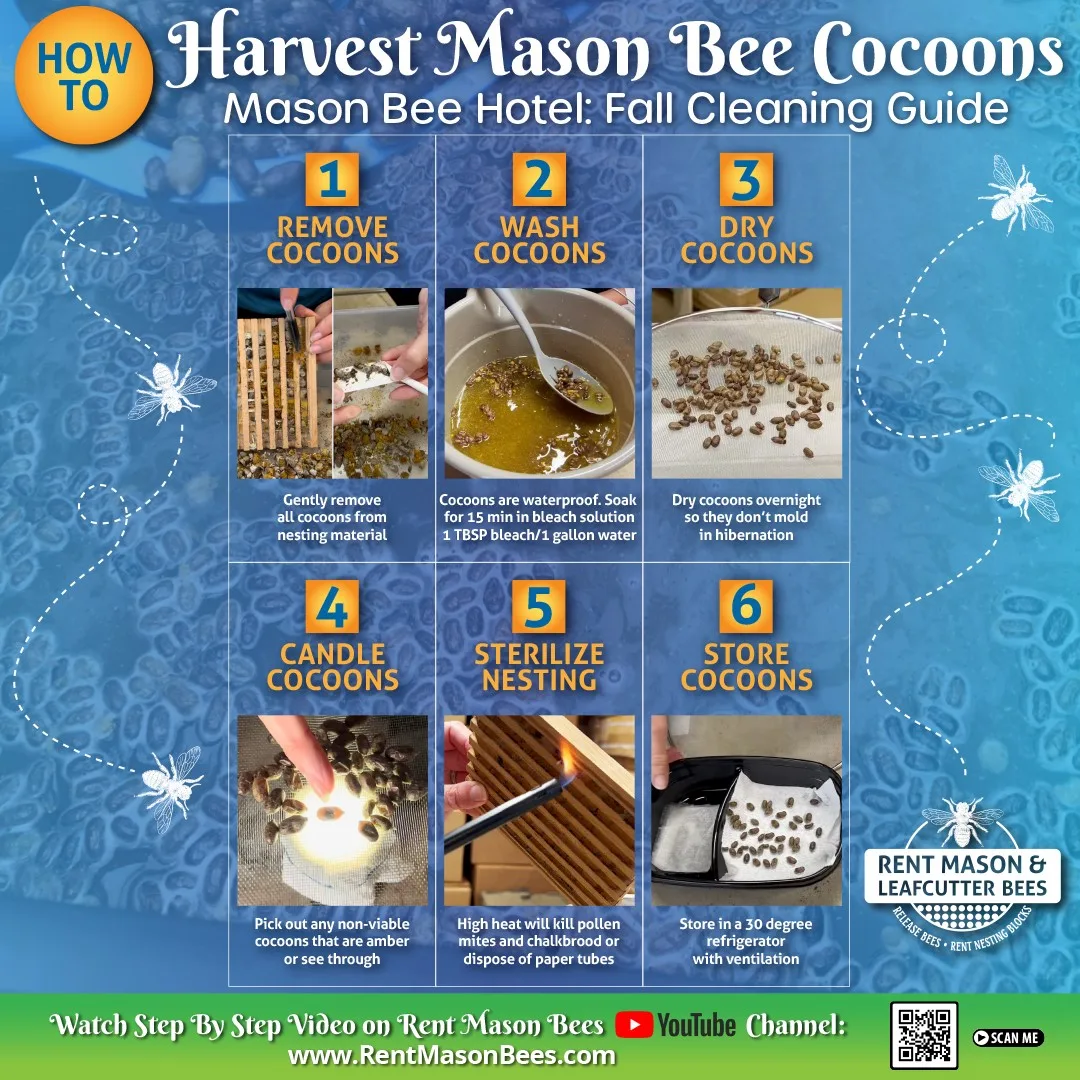
When you rent through our program, we handle all the cleaning for you. But if you host your own bees, proper year-round care is essential to keep them healthy and thriving. This blog will teach you everything you need to know about cleaning your cocoons, how to store them and how to identify what’s inside your nesting material. We do our fall Harvest the first week of October. October and November is a great time to harvest when temperatures dip and the weather starts to chill off.
REMINDER: Do your fall cleaning outside. Don’t bring your cocoons inside or use warm water.
If you are part of our rental program, simply mail your blocks back to us in September—we’ll take care of the cleaning for you. If you’re raising your own bees, here’s a step-by-step video that shows you exactly how to do it. See our cleaning supply list below.
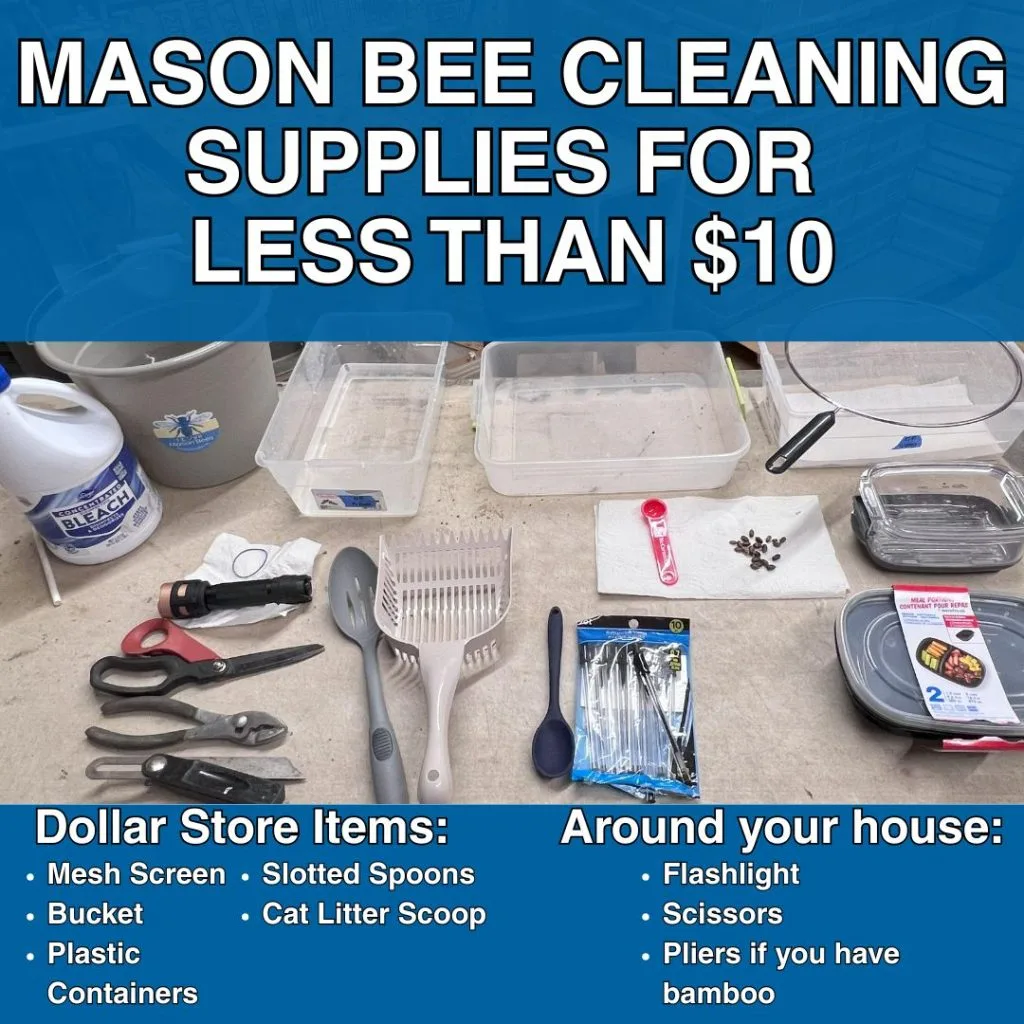
Mason Bee Cleaning Supplies for Less Than $10
Dollar Store Shopping List
- Mesh grease splatter screen
- Bucket
- 1–2 plastic containers (one for extracting cocoons, one for clean water)
- Cat litter scoop
- 2 slotted spoons
- Measuring spoons
- Plastic food storage container
- Roll of paper towels
- Pens with pointy lids
- Bleach
Items Laying Around Your House
- Flashlight
- Scissors
- Pliers
YEAR-ROUND CARE:
Early Spring: Start with Clean, Easy-to-Open Nesting Material
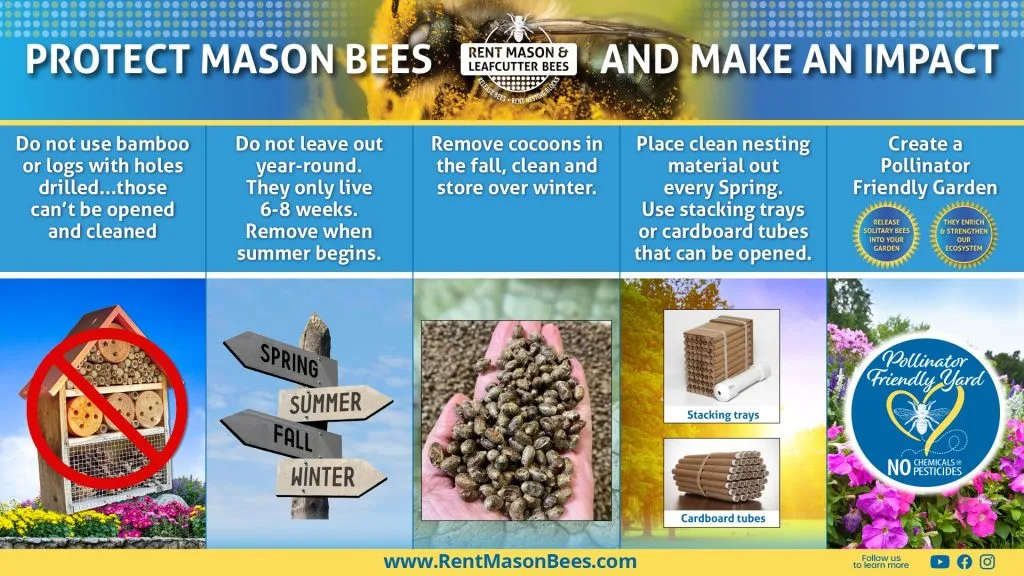
Always place out fresh, clean nesting material at the beginning of spring. Choose materials that can be opened and cleaned—such as stacking trays or cardboard tubes. This makes it easier to harvest cocoons and remove pests later.
End of Spring: Remove and Store Safely
Once spring ends, your mason bees will have completed their short 6–8 week lifecycle. At this point, remove the nesting material and store it in a cool garage or shed. Leaving it outside over summer invites predators like mono wasps and birds to attack.
👉 Watch our video on summer storage to see how to do this step-by-step.
Fall: Harvest and Clean
In the fall, open your nesting materials and carefully harvest and clean the cocoons. This crucial step removes pests and gives your bees the best chance of survival for next season.
Subscribe to our newsletter to learn more about mason and leafcutter bees.



