Blog · Mason Bees · Bee Care ·
Welcome Spring Mason Bees into Your Yard

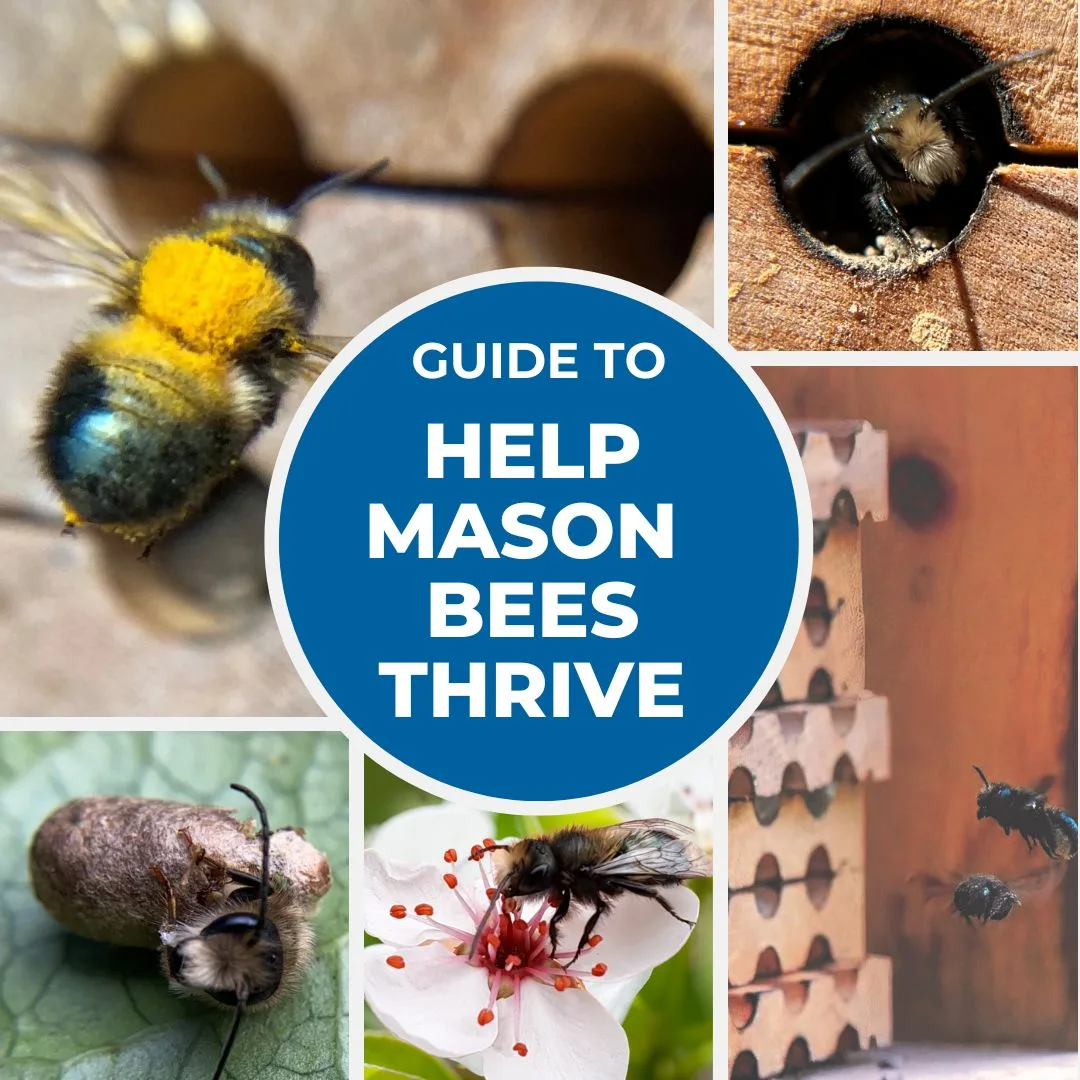
As winter thaws and temperatures rise, mason bees will soon emerge! Once temps reach 55°F+, these essential pollinators wake from hibernation, ready to get to work. Millions of bee hotels are sold each year or already sitting in backyards, but most come without care instructions, leaving many unaware that proper maintenance is essential. Without the right steps, predators can invade, harming future generations of bees. It’s time to change that and ensure these vital pollinators get the protection they need to thrive!
Did You Know?
- Mason Bees Are Solitary: Each female lays her own eggs, builds her nest, and gathers food. No hive, no queen, no honey—this makes them non-aggressive and they do not sting.
- They Hibernate in Cocoons: Like butterflies, mason bees spin cocoons in summer and sleep through winter, emerging in early spring. Watch how they emerge
- Nature’s Best Pollinators: Fuzzy hairs on their body, called scopa, collects loose pollen, enabling them to pollinate 95% of blooms they touch and they can visit over 2,000 blossoms a day!
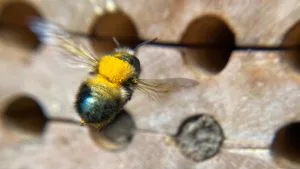
- BEE AMAZED! Watch & Learn: See the full mason bee life cycle and predators that harm them in this BEE AMAZED video filmed with macro lens.
How You Can Make a Difference! SPRING Steps for a Healthy Habitat
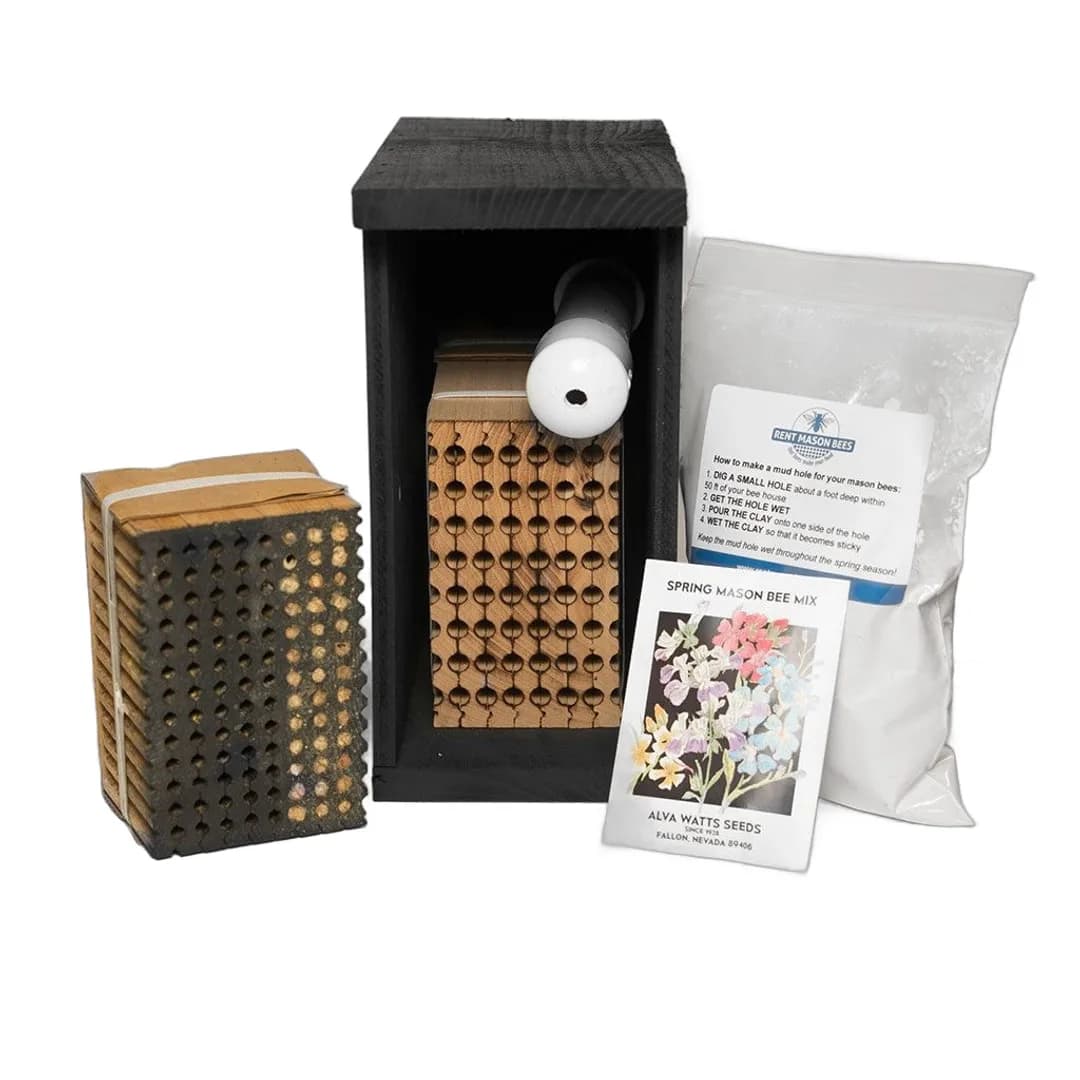
- Place NEW nesting material out at the beginning of Spring – Mason bee houses are not year-round homes! Replace with new or cleaned nesting material at the start of spring to ensure a healthy environment.
- Use Easy-to-Open Nesting Materials – Avoid bamboo & drilled logs, they get moldy and cannot be opened. Instead, use stacking trays or cardboard tubes.
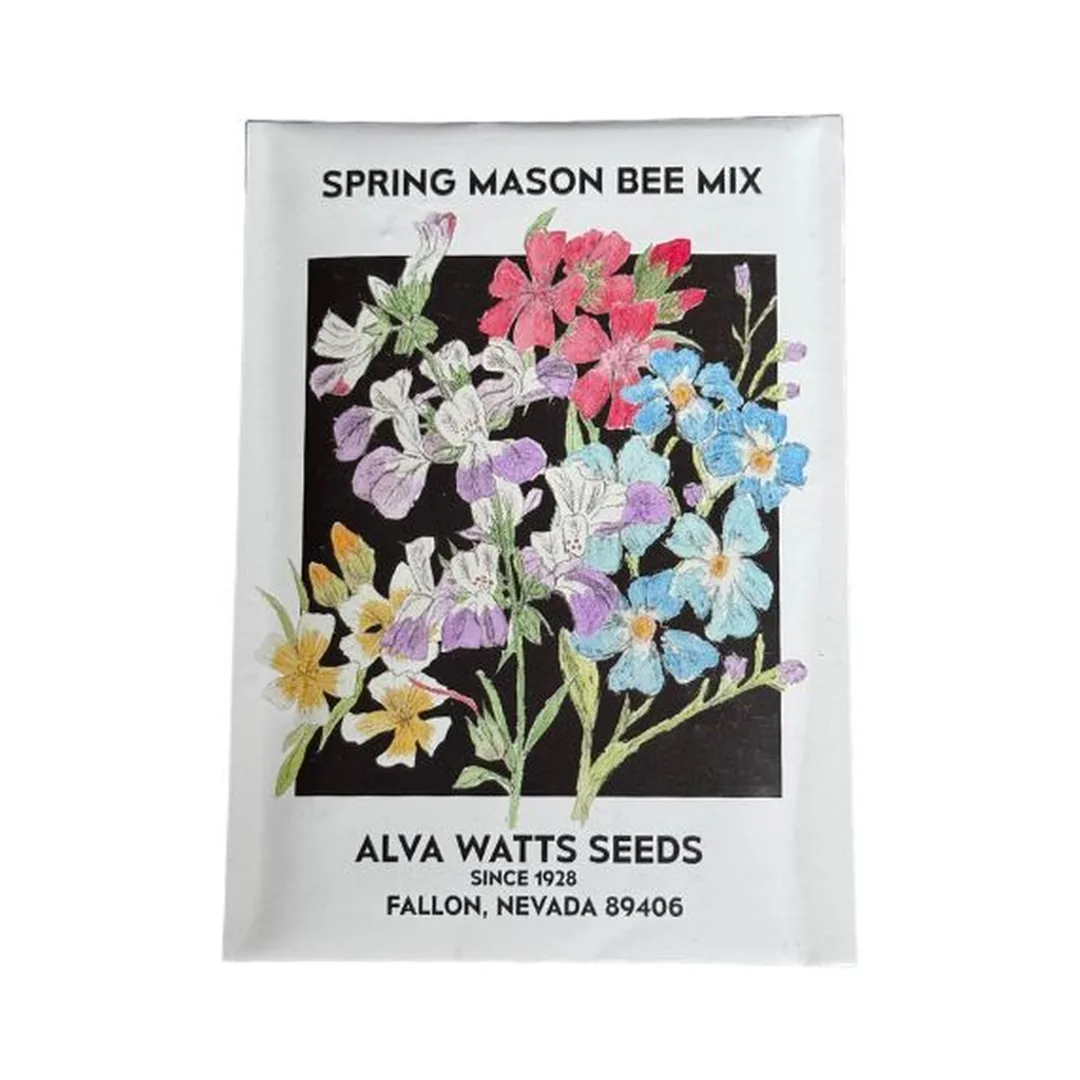
- Provide Food Sources – Plant early-blooming flowers and keep dandelions—bees’ first food! Don’t use chemicals or sprays. Learn what to plant in your yard with these beautiful GARDEN CARDS.
- Hang on Flat Surface – Hang your bee house on a fence or wall, not on trees.
- Sunlight Matters – Pick a sunny location with morning to afternoon sun.
- Height Guide – Mount 5–6 feet off the ground.
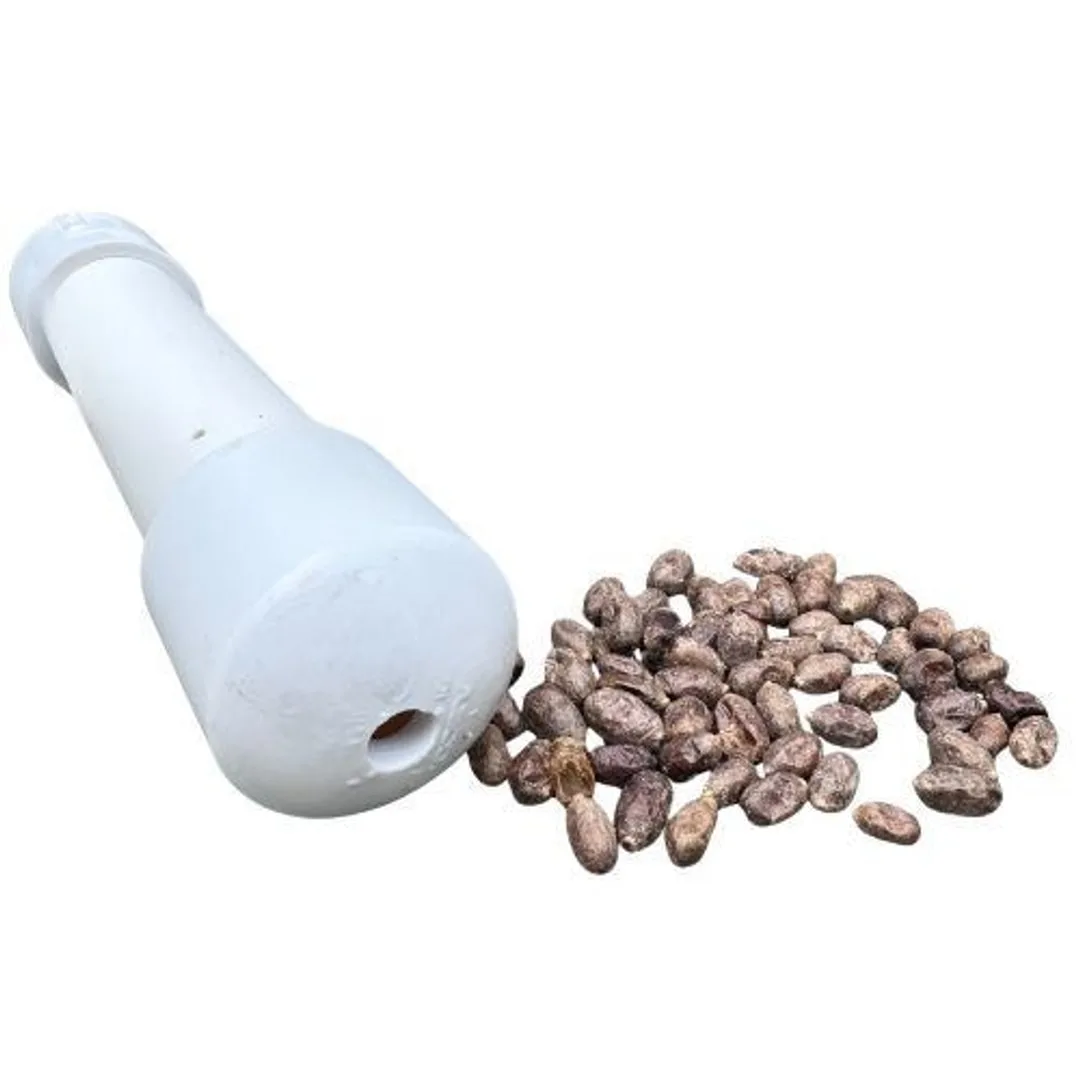
- Mud is Essential – Provide clean, chemical-free mud for nesting.
Essential Step: Remove in Early Summer!
- Mason bees only live 6–8 weeks—they do not stay year-round.
- Leaving nests out over summer attracts predators, like mono wasps, that destroy developing larvae.
- Store nests in a cool garage or shed until fall/winter. Watch summer storage video
Fall/Winter: Open & Clean Cocoons
To protect your bees, harvest and clean cocoons in fall/winter. This removes deadly threats like pollen mites, Houdini fly larvae, mono wasps, and chalkbrood. Watch step-by-step video to clean your own bees.
Want Pollination Without the Hassle of Cleaning? Many enjoy raising and cleaning their own mason bees, and we offer step-by-step videos on our YouTube channel to guide you. If you love the benefits of pollination but prefer a hands-off approach, simply release bees and rent nesting blocks where fall and winter care is handled for you. If you rent our bees, this is how we clean over 3 million a year. Mind blowing video!
Visit Rent Mason Bees for bee kits/mason bees supplies and learn more about mason bees. Common questions