Blog · Mason Bees ·
Grow More Fruit with Mason Bees!

If you want healthier fruit trees and bigger harvests, pollination is where it all begins. And timing matters more than most gardeners realize. Fruit trees bloom early in the season, often before many pollinators are active. That’s where mason bees come in.
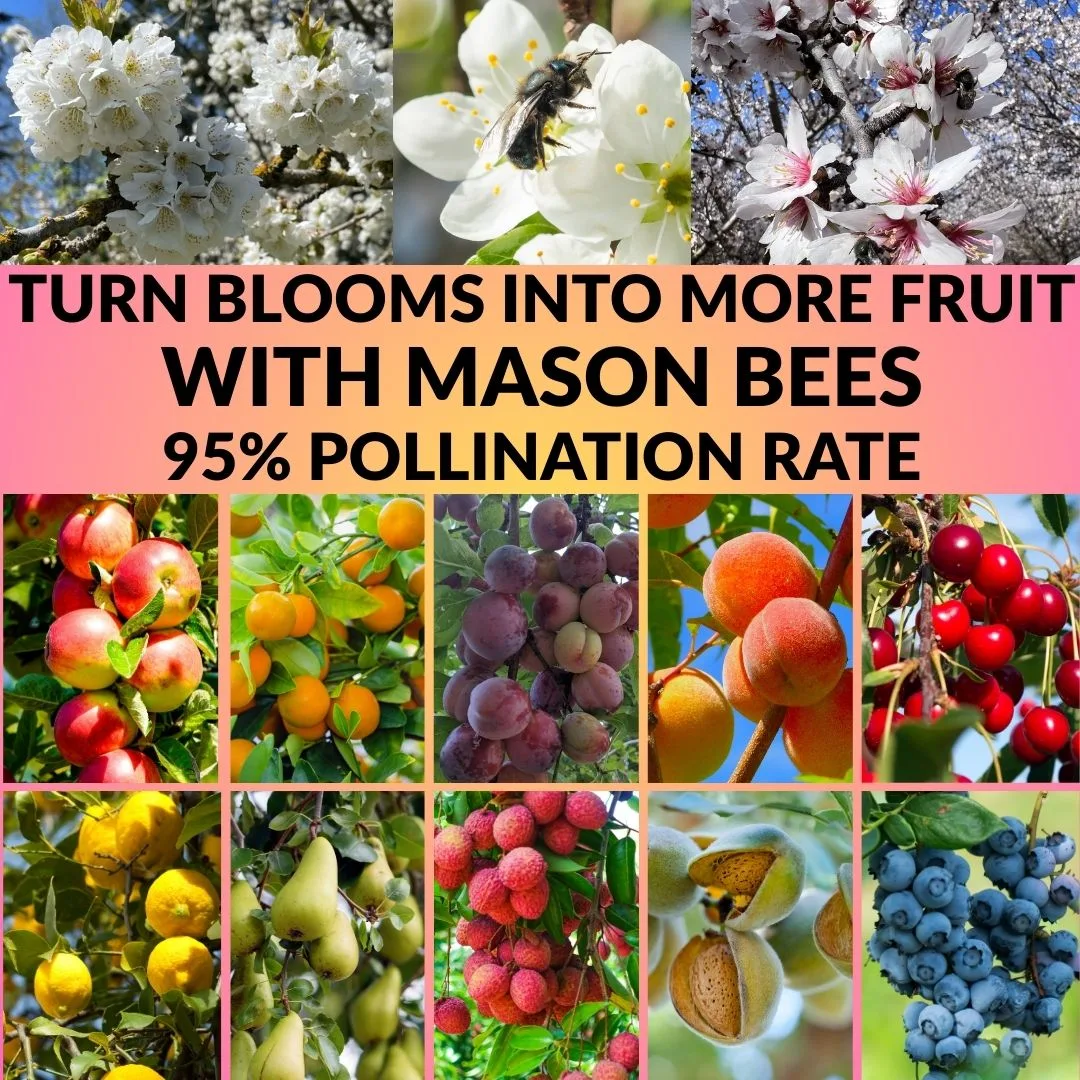
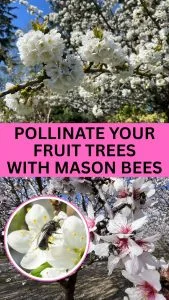 Mason bees are early spring specialists. They emerge from their cocoons when daytime temperatures consistently reach around 50°F—right when apples, cherries, pears, plums, and berries begin to bloom. This early activity makes them perfectly timed for fruit tree pollination.
What truly sets mason bees apart is how effective they are. Covered in loose, dry pollen, mason bees are up to 95% effective pollinators, meaning a single visit is far more likely to result in successful pollination than many other bees. In fact, one mason bee can visit up to 2,000 blossoms in a single day, helping turn more blooms into fruit with fewer bees overall.
Mason bees are also incredibly easy to host. Unlike honey bees, they are solitary bees, which means there is no hive, no queen, and no colony to defend. Each female builds her own nesting chamber, gathers pollen and nectar for her young, and then moves on. Because they have no hive to protect, mason bees are gentle and do not sting, making them safe for home gardens, schools, and family spaces.
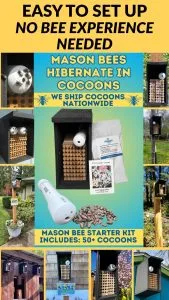
Another advantage is simplicity. Hosting mason bees doesn’t require beekeeping experience, honey harvesting, or ongoing hive management. You provide nesting materials, release the bees at the right time, and let them do what they do best: pollinate. After the spring season, cocoons can be stored safely and protected from predators until the next year, supporting long-term bee health and sustainability.
For gardeners and orchardists alike, mason bees offer a natural, low-effort way to improve fruit set while supporting bees. By matching pollination to bloom timing and working with nature instead of against it, mason bees help ensure that spring blossoms turn into the fruits we look forward to harvesting all season long.
If you’re planning for spring, now is the time to think about pollination. A little preparation before bloom can make a big difference at harvest.
Watch to Learn How They Help Grow More Fruit!