

Meet the Wasp That Hunts Crickets & Nests in Your Bee Hotel

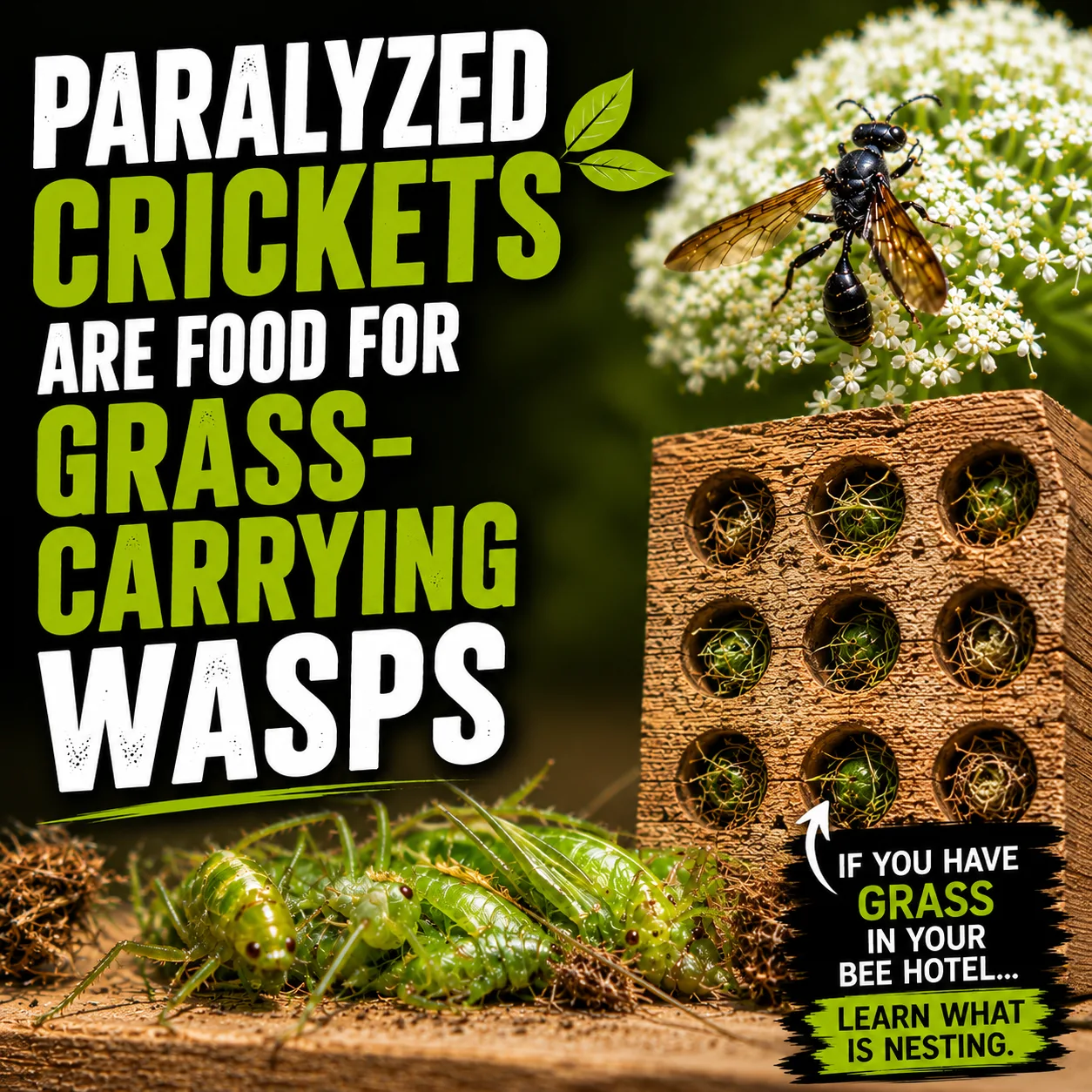
If you’ve ever looked closely at your bee house and noticed blades of grass sticking out of the nesting holes, you have grass-carrying wasps building nests.
🎥 Learn How the Grass-Carrying Wasp Nests
See the inside of a grass-carrying wasp nest. Learn how they hunt and paralyze crickets for their developing young, and watch how they spin a silk cocoon to hibernate in over winter.
▶️ Watch the video below:
Although it shares nesting habitat with mason bees and leafcutter bees, this remarkable solitary wasp has developed an entirely different strategy for raising its young. Instead of collecting mud or leaves, she gathers grass. Instead of pollen, she hunts crickets.
It’s one of nature’s most incredible parenting stories.
A Solitary Wasp, Not a Social Wasp
When people hear the word “wasp,” they often think of yellowjackets or paper wasps that aggressively defend their nests.
Grass-carrying wasps are completely different.
These are solitary wasps, meaning every female builds and provisions her own nest. There is no queen, no colony, and no workers protecting the nest. Their focus is simply raising the next generation before their short lives come to an end.
Because they don’t have a colony to defend, they are gentle insects that are rarely interested in people.
Sharing Bee Houses with Solitary Bees
Grass-carrying wasps often take advantage of existing nesting cavities.
They frequently use the same nesting holes found in bee hotels designed for mason bees and leafcutter bees. If you notice grass protruding from the entrance of a nesting tunnel, it’s a good sign a grass-carrying wasp has moved in.
Rather than being a problem, they’re simply another beneficial insect making use of available habitat.
Why They’re Called Grass-Carrying Wasps
Unlike mason bees, which build nest walls with mud, or leafcutter bees, which carefully cut circular pieces of leaves, grass-carrying wasps gather long, narrow blades of dried grass.
Using their jaws, they weave the grass into small nesting chambers inside the tunnel.
Each chamber becomes a nursery for a single developing baby.
The woven grass creates a surprisingly secure cradle that protects the growing larva throughout its development.
A Completely Different Nursery
The biggest difference between solitary bees and grass-carrying wasps is how they feed their young.
Mason bees and leafcutter bees spend their days collecting pollen and nectar. They create a pollen loaf, lay one egg beside it, and seal the chamber.
Grass-carrying wasps are hunters.
Instead of visiting flowers to gather pollen for their offspring, the female searches for small crickets or katydid nymphs.
Once she finds one, she delivers a carefully placed sting that paralyzes the insect without killing it.
This is one of nature’s most remarkable survival strategies.
Because the cricket remains alive but motionless, it stays fresh instead of decomposing.
The female carries the paralyzed cricket back to her grass-lined nest, lays a single egg beside it, and seals the chamber.
When the egg hatches, the tiny larva immediately has a perfectly fresh food supply waiting.
From Larva to Adult
After feeding on the cricket, the larva grows rapidly into a plump, healthy grub.
Once fully developed, it spins a protective silk cocoon inside the nesting chamber.
The cocoon protects it throughout the winter while it remains dormant.
When warm weather returns the following summer, the adult grass-carrying wasp chews its way out of the nesting tunnel and begins the entire cycle again.
An Important Beneficial Insect
Although they don’t collect pollen to feed their young, adult grass-carrying wasps still visit flowers for nectar, making them occasional pollinators.
Perhaps even more importantly, they help naturally control populations of crickets and similar insects.
By supporting grass-carrying wasps, you’re encouraging another native insect that contributes to a healthy, balanced backyard ecosystem.
Every Nest Tells a Story
The next time you inspect your bee hotel, don’t assume every occupied hole belongs to a bee.
If you see blades of grass woven into the entrance, you’ve likely found a grass-carrying wasp hard at work.
That tiny bundle of grass represents one of nature’s most remarkable nurseries—a carefully woven home containing a paralyzed cricket, a single egg, and the next generation waiting to emerge next summer.
Whether it’s mason bees, leafcutter bees, or grass-carrying wasps, every occupied nesting hole offers a fascinating glimpse into the incredible diversity of solitary insects living right in our own backyards.



